What Does “Primordial” Mean?
The word primordial describes something that belongs to the earliest beginning, the original state, or the first stage of existence.
Quick Definition
Primordial (adjective): Existing from the beginning of time; original; earliest; fundamental.
Simple Meaning
In simple English, primordial means:
- Existing first
- Very ancient
- Original
- Present from the beginning
- Basic or fundamental
Think of it as describing something that existed before modern civilization or before later developments occurred.
What Does Primordial Mean in Different Contexts?
The meaning remains similar across different fields, but the context changes slightly.
Science
Scientists use primordial to describe conditions that existed during Earth’s earliest history.
Examples include:
- Primordial Earth
- Primordial atmosphere
- Primordial ocean
- Primordial soup
Example:
Scientists believe life developed in Earth’s primordial oceans.
Astronomy
In astronomy, primordial refers to objects or matter that formed shortly after the universe began.
Examples:
- Primordial gas
- Primordial black holes
- Primordial matter
Example:
Researchers study primordial galaxies to understand the early universe.
Biology
Biologists often discuss primordial cells or primordial organisms when explaining the earliest forms of life.
Example:
The study focuses on primordial microorganisms.
Mythology
Many myths describe primordial beings or primordial gods who existed before other deities.
Example:
In several ancient traditions, primordial gods represented the original forces of creation.
Literature
Authors use primordial to create imagery of ancient landscapes, instincts, or emotions.
Example:
The novel describes a primordial forest untouched by humans.
Psychology
Psychologists sometimes use the word to describe basic human instincts or deeply rooted emotions.
Example:
Fear is often considered a primordial survival instinct.
Origin and History of Primordial
The word primordial comes from the Latin word primordialis, which means first order, beginning, or origin.
Its roots include:
- Primus = first
- Oriri = to arise or begin
The term entered the English language in the 14th century and has long been used in science, philosophy, theology, and literature to describe original or earliest conditions.
Although its meaning has remained remarkably consistent over the centuries, modern science has given the word new relevance through terms like primordial soup and primordial black holes.
How People Actually Use Primordial
Most people use primordial when talking about things that are:
- Extremely old
- Original
- Ancient
- Natural
- Fundamental
You’ll often hear it in discussions about:
- Evolution
- Geology
- Dinosaurs
- Space
- Ancient civilizations
- Philosophy
- Human instincts
Examples:
- Primordial oceans
- Primordial forests
- Primordial chaos
- Primordial energy
- Primordial landscape
10 Real Examples of Primordial in Sentences
Example 1
The scientists examined rocks formed during Earth’s primordial history.
Meaning: The earliest period of Earth’s existence.
Example 2
Many cultures tell stories about primordial gods creating the world.
Meaning: Original deities existing before others.
Example 3
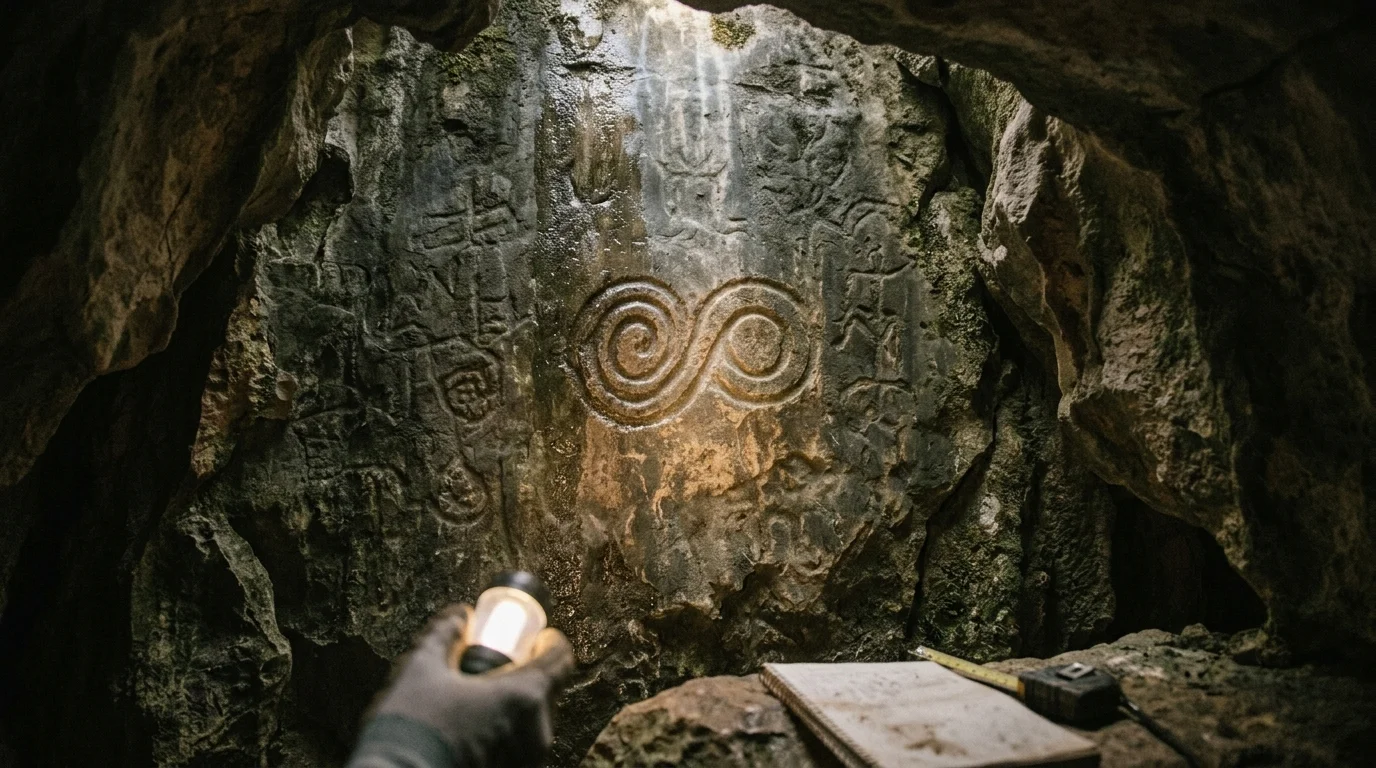
The cave remained almost primordial despite modern civilization.
Meaning: Ancient and largely unchanged.
Example 4
His primordial fear of darkness never disappeared.
Meaning: Deep, instinctive fear.
Example 5
Researchers continue studying primordial black holes.
Meaning: Black holes that may have formed shortly after the Big Bang.
Example 6
The rainforest felt primordial and untouched.
Meaning: Ancient and natural.
Example 7
Life may have begun in a primordial soup rich in chemicals.
Meaning: The hypothetical environment where life first emerged.
Example 8
The documentary explored primordial oceans.
Meaning: Earth’s earliest oceans.
Example 9
The novel paints a picture of a primordial wilderness.
Meaning: Original, ancient landscape.
Example 10
Some instincts remain primordial despite modern society.
Meaning: Basic instincts inherited from early human evolution.
Common Phrases Using Primordial
Several expressions commonly use this adjective.
| Phrase | Meaning |
|---|---|
| Primordial soup | Hypothetical environment where life originated |
| Primordial Earth | Earth during its earliest formation |
| Primordial ocean | Earth’s original oceans |
| Primordial forest | Ancient, untouched forest |
| Primordial instinct | Basic survival instinct |
| Primordial chaos | Original state before order |
| Primordial energy | Original creative force |
| Primordial matter | Matter existing soon after the Big Bang |
Synonyms of Primordial
Here are several words with similar meanings.
| Synonym | Meaning |
| Original | Existing first |
| Ancient | Very old |
| Earliest | First in time |
| Primitive | Early stage of development |
| Primeval | Belonging to ancient times |
| Initial | Existing at the beginning |
| Fundamental | Basic and essential |
| Primary | First or most important |
| Archetypal | Original model |
| Prehistoric | Before recorded history |
Antonyms of Primordial
Opposite words include:
- Modern
- Recent
- New
- Contemporary
- Current
- Advanced
- Developed
- Updated
Common Mistakes and Misunderstandings
Thinking It Means “Very Old”
Although primordial often refers to ancient things, it specifically emphasizes the earliest origin, not just old age.
Confusing It with Primitive
These words are related but not identical.
- Primordial = Existing from the beginning.
- Primitive = Less developed or early in development.
Using It for Everyday Objects
It would sound unusual to say:
❌ My primordial laptop.
Instead, use primordial only for things connected with origins, nature, science, history, or fundamental ideas.
Is Primordial Positive, Negative, or Neutral?
Primordial is generally neutral.
Its emotional tone depends on context.
Positive
- Primordial beauty
- Primordial wisdom
- Primordial forests
Neutral
- Primordial atmosphere
- Primordial Earth
- Primordial oceans
Negative
- Primordial chaos
- Primordial fear
- Primordial darkness
The word itself carries no fixed positive or negative meaning.
Should You Use the Word Primordial?
Use It If
- You’re writing academically.
- You’re discussing science or history.
- You’re describing something ancient or original.
- You want richer, more descriptive vocabulary.
Avoid It If
- Simpler words like “old” or “first” communicate your meaning more clearly.
- Your audience may not be familiar with advanced vocabulary.
- You’re writing for very young readers.