
What Does “Abalone” Mean?
Quick Definition
Abalone is a marine mollusk with a single ear-shaped shell, valued for both its edible meat and its colorful shell.
Literal Meaning
The word abalone refers to the sea animal itself as well as the shell it produces.
Most Common Meaning
Today, abalone most commonly refers to:
- A marine sea snail
- A seafood delicacy
- A decorative shell
- A material used in jewelry and crafts
- A symbol of peace and prosperity in some cultures
What Does Abalone Mean in Different Contexts?
Marine Biology
In biology, an abalone is a marine gastropod mollusk that attaches itself to rocks in coastal waters using a muscular foot.
It feeds mainly on algae and plays an important role in coastal marine ecosystems.
Seafood
Abalone is considered a premium seafood in many parts of the world.
It is commonly prepared by:
- Steaming
- Grilling
- Stir-frying
- Braising
- Slicing thin for soups
- Serving with sauces
Its firm texture and delicate flavor make it a prized ingredient in many cuisines.
Jewelry and Decorative Arts
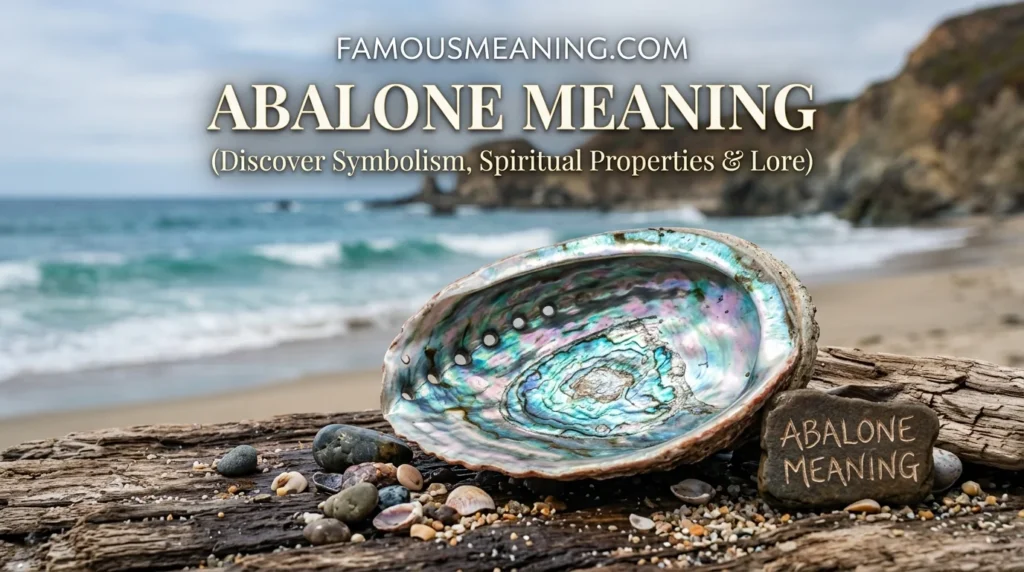
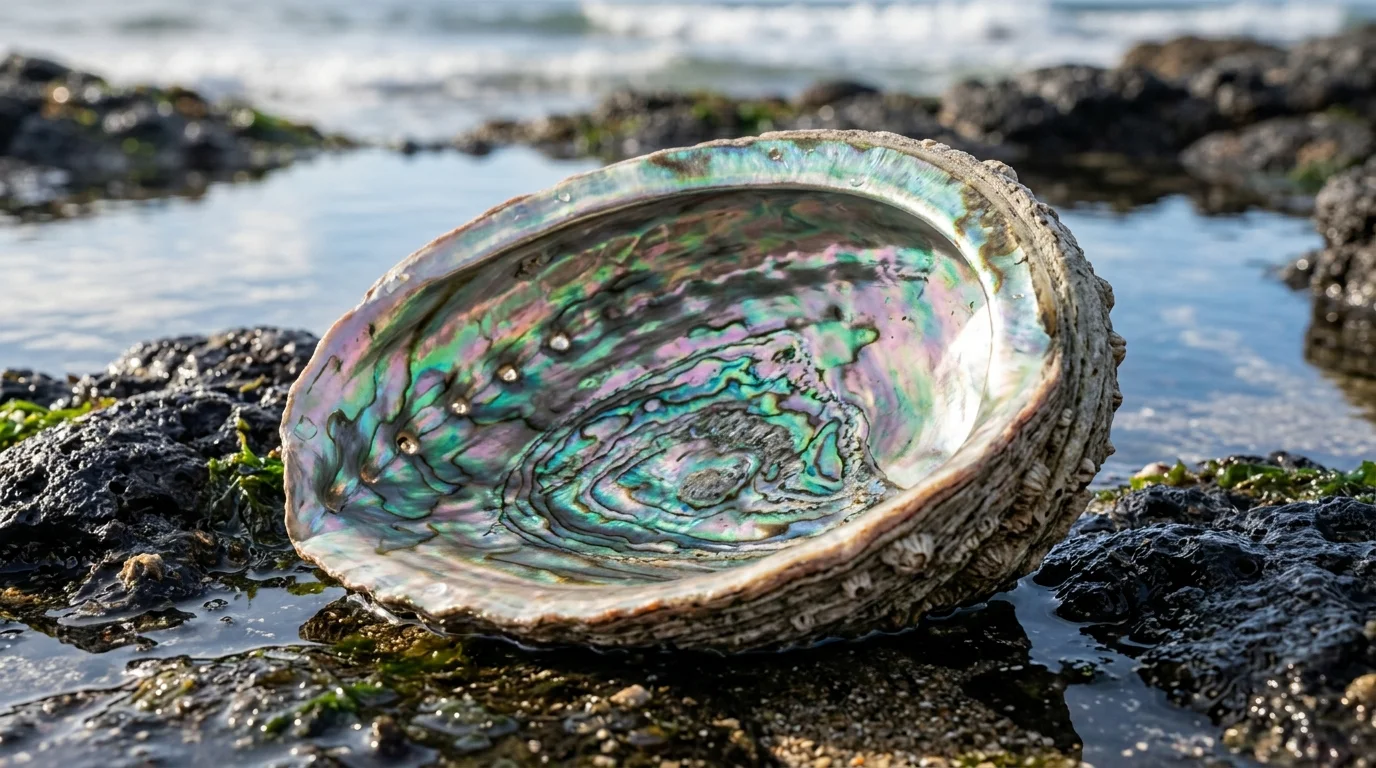
The inside of an abalone shell has a brilliant, iridescent appearance known as nacre, or mother-of-pearl.
Craftspeople use abalone shells to make:
- Necklaces
- Earrings
- Rings
- Bracelets
- Buttons
- Musical instrument inlays
- Decorative ornaments
Spiritual Symbolism
In various cultural and spiritual traditions, abalone is associated with:
- Emotional healing
- Peace
- Compassion
- Protection
- Balance
- Prosperity
These symbolic meanings are based on cultural beliefs and traditions rather than scientific evidence.
Indigenous and Cultural Uses
Some Indigenous communities have traditionally used abalone shells in ceremonies, artwork, and cultural practices. Their significance varies by community and region.
Origin and History of Abalone
Where Does the Word Come From?
The English word abalone is believed to come from the Spanish abulón, which itself was borrowed from an Indigenous language of the Americas.
Over time, the word became the standard English name for this marine mollusk.
Historical Uses
For centuries, people have valued abalone for:
- Food
- Jewelry
- Decorative carvings
- Trade
- Ceremonial objects
- Cultural traditions
Its shell has long been appreciated for its natural beauty.
Modern Usage
Today, abalone is commonly found in discussions about:
- Seafood
- Marine conservation
- Jewelry
- Interior decoration
- Cultural heritage
- Sustainable aquaculture
Pronunciation of Abalone
The most common English pronunciation is:
Ab-uh-LOH-nee
Phonetic spelling: ab-uh-LOH-nee
How People Actually Use the Word “Abalone”
Most people use abalone when talking about:
- Seafood dishes
- Coastal wildlife
- Jewelry
- Decorative shells
- Ocean life
- Luxury cuisine
- Cultural traditions
You’ll often hear phrases like:
- Fresh abalone
- Abalone shell
- Wild abalone
- Farm-raised abalone
- Abalone jewelry
- Abalone pearls
Real Examples of Abalone in Conversations
Example 1
Person A: What’s that colorful shell?
Person B: It’s an abalone shell.
Meaning: Referring to the decorative shell of the mollusk.
Example 2
Person A: Is abalone expensive?
Person B: Yes, it’s considered a premium seafood.
Meaning: Discussing its culinary value.
Example 3
Person A: Your necklace is beautiful.
Person B: It’s made with abalone shell.
Meaning: The shell is used in jewelry.
Example 4
Person A: Where do abalones live?
Person B: They live on rocky ocean coastlines.
Meaning: Discussing the animal’s habitat.
Example 5
Person A: Why does the shell shine?
Person B: The inside contains iridescent nacre.
Meaning: Explaining the shell’s appearance.
Example 6
Person A: Is abalone a fish?
Person B: No, it’s a marine mollusk.
Meaning: Correcting a common misconception.
Example 7
Person A: Why do some people keep abalone shells?
Person B: Many admire their beauty, while others value their cultural or symbolic significance.
Meaning: Referring to decorative and traditional uses.
Example 8
Person A: Can abalone be farmed?
Person B: Yes, many abalones are now raised through aquaculture.
Meaning: Discussing sustainable seafood production.
Example 9
Person A: Is abalone common worldwide?
Person B: Different species are found in coastal waters around the world.
Meaning: Referring to global distribution.
Example 10
Person A: What does abalone symbolize?
Person B: In some traditions, it represents peace, protection, and emotional balance.
Meaning: Cultural symbolism.
Common Mistakes and Misunderstandings
Mistake 1: Abalone Is a Fish
Incorrect.
Abalone is a marine mollusk, not a fish.
Mistake 2: Every Colorful Shell Is Abalone
False.
Many sea shells are colorful, but only shells from abalone have the distinctive shape and iridescent interior associated with this mollusk.
Mistake 3: Abalone Symbolism Is Scientifically Proven
Not necessarily.
Spiritual meanings connected to abalone come from cultural and traditional beliefs rather than scientific evidence.
Mistake 4: All Abalone Is Wild-Caught
Incorrect.
Today, both wild and farm-raised abalone are available, although regulations vary by country to help protect wild populations.
Similar Words and Related Terms
| Term | Meaning | Difference |
|---|---|---|
| Mollusk | Soft-bodied invertebrate animal | Broader animal group |
| Sea Snail | Marine gastropod | General category that includes abalone |
| Oyster | Shellfish with two shells | Different type of mollusk |
| Clam | Bivalve mollusk | Has two shells instead of one |
| Mother-of-Pearl | Iridescent shell lining | Material found inside abalone shells |
| Nacre | Shiny inner shell layer | Scientific term for mother-of-pearl |
| Conch | Large marine snail | Different species |
| Shellfish | Aquatic animals with shells | Broad category |
| Pearl | Hard object formed in some mollusks | Different from an abalone shell |
| Aquaculture | Farming aquatic organisms | Includes farm-raised abalone |
Internal linking opportunities: mollusk meaning, shellfish meaning, nacre meaning, pearl meaning, aquaculture meaning.
Is Abalone Positive, Negative, or Neutral?
The word abalone is generally neutral, although it often has positive associations.
Positive Associations
- Natural beauty
- Fine dining
- Ocean life
- Prosperity
- Craftsmanship
- Cultural traditions
Neutral Uses
- Marine biology
- Seafood
- Conservation
- Aquaculture
- Jewelry
The emotional tone depends on the context in which the word is used.
Should You Use the Word “Abalone”?
Use It If
- You’re referring to the marine mollusk.
- You’re discussing seafood or coastal wildlife.
- You’re talking about jewelry, shells, or decorative arts.
- You’re describing cultural traditions involving abalone.
Avoid Confusing It With
- Oysters
- Clams
- Mussels
- General sea snails
Although they’re all marine animals, they belong to different groups and have distinct characteristics.