
Quick Definition
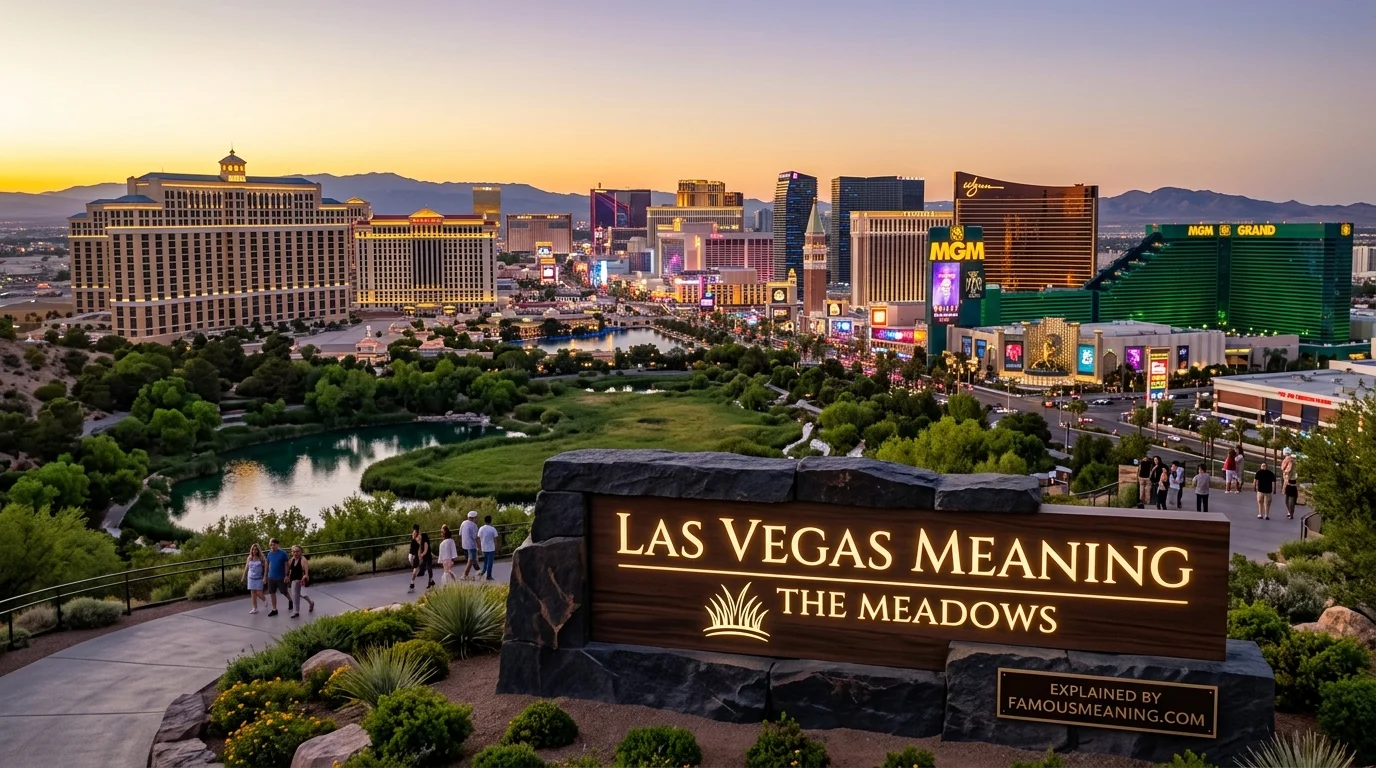
Las Vegas literally means “the meadows” in Spanish.
The name comes from the Spanish word vega, meaning a meadow, fertile plain, or lowland area, with las meaning “the.”
So:
Las = the
Vegas = meadows
Therefore:
Las Vegas = the meadows.
The name refers to the area’s historical landscape rather than its modern reputation as a major entertainment destination.
What Does Las Vegas Mean in Spanish?
In Spanish, las is a feminine plural definite article meaning “the.”
Vegas is the plural of vega, a word that can refer to fertile lowland, meadowland, or a plain.
Together, Las Vegas can be translated as:
“The meadows.”
The translation is simple, but the historical context behind the name makes it particularly interesting.
Why Is Las Vegas Called Las Vegas?
The name is associated with Spanish-speaking explorers and travelers who encountered the valley centuries before the modern city developed.
The Las Vegas Valley contained areas with water and vegetation that stood out within the surrounding Mojave Desert environment.
The name Las Vegas reflected those greener, more fertile areas.
This is an important part of understanding the name: the original meaning describes the landscape, not casinos or entertainment.
The modern image of Las Vegas developed much later.
What Does “Vega” Mean?
The Spanish word vega has a geographical meaning connected with fertile land, meadows, or low-lying plains.
The term can be used for land that is comparatively productive because of access to water.
This helps explain why Las Vegas can literally be understood as “the meadows.”
The plural form vegas refers to multiple meadow areas or meadowlands.
Las Vegas Meaning in Simple English
If you want the simplest possible explanation:
Las Vegas means “the meadows” in Spanish.
The name refers to the greener and more fertile parts of the valley that early Spanish explorers encountered.
Today, however, when someone says Las Vegas, they are usually referring to the city in Nevada rather than thinking about the literal Spanish translation.
What Is Las Vegas Known For?
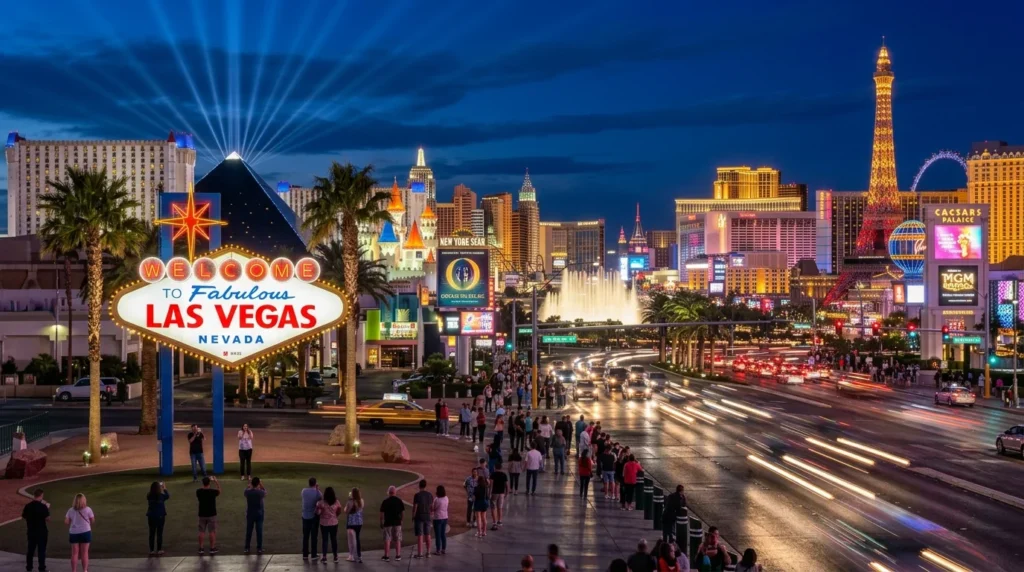
Modern Las Vegas is internationally recognized for entertainment and tourism.
The city and surrounding metropolitan area are associated with:
- Casinos
- Hotels and resorts
- Live entertainment
- Restaurants
- Nightlife
- Conventions
- Shopping
- Weddings
- Sports
- Tourism
- The Las Vegas Strip
The Las Vegas Strip is particularly famous for its large resort properties, entertainment venues, restaurants, casinos, and themed attractions.
It is worth noting that the Strip is not entirely within the municipal boundaries of the City of Las Vegas. Much of the famous resort corridor is located in nearby unincorporated areas of Clark County.
Why Is Las Vegas Called “Sin City”?
One of Las Vegas’s most famous nicknames is “Sin City.”
The nickname is associated with the city’s long-standing reputation for gambling, nightlife, adult entertainment, alcohol, and other activities that have historically been viewed as morally questionable by some people.
However, “Sin City” is a nickname, not the literal meaning of Las Vegas.
The actual Spanish meaning remains:
“The meadows.”
The nickname developed from the city’s cultural and commercial reputation rather than from the meaning of its Spanish name.
What Is the Nickname for Las Vegas?
Las Vegas has several well-known nicknames and descriptive expressions.
Sin City
This is perhaps the most famous nickname and emphasizes the city’s reputation for gambling and nightlife.
The Entertainment Capital of the World
Las Vegas is frequently promoted using this phrase because of its major role in live entertainment, concerts, shows, sports events, and tourism.
Vegas
Vegas is the common shortened form of Las Vegas.
For example:
“I’m going to Vegas this weekend.”
In casual conversation, most people immediately understand that “Vegas” means Las Vegas, Nevada.
What Does “Vegas” Mean by Itself?
The word Vegas can mean different things depending on context.
Literally, it is the plural form of Spanish vega, referring to meadowland or fertile lowland.
But in English conversation, Vegas commonly serves as a shortened name for Las Vegas.
For example:
“She moved to Vegas.”
Usually, this means:
“She moved to Las Vegas.”
So when people use Vegas in everyday English, they are generally using it as a proper place name rather than discussing Spanish geography.
Las Vegas Meaning and the Desert
The name can seem ironic because Las Vegas is located in the Mojave Desert.
However, the historical landscape was not simply an empty, dry expanse.
Water from natural springs helped create greener areas in the valley.
These meadow-like areas were significant enough to inspire the Spanish name.
Over time, the natural environment changed substantially as the region developed into a modern city.
Where Did the Name Las Vegas Come From?
The name is generally attributed to Spanish explorers who encountered the valley and its water-supported vegetation.
A commonly cited historical account connects the naming of the valley with Rafael Rivera, who traveled through the area in the 1820s as part of a Mexican expedition.
The broader history of the region includes Indigenous peoples, Spanish and Mexican exploration, the Old Spanish Trail, American settlement, railroad development, and eventually the growth of the modern city.
The exact historical details surrounding early naming are sometimes simplified in popular accounts, so it is useful to distinguish the well-established Spanish meaning of Las Vegas from claims about precisely who first applied the name and under what circumstances.
When Was Las Vegas Founded?
The modern settlement developed much later than the original Spanish naming of the valley.
The City of Las Vegas was incorporated in 1911.
Before that, the area had already been used and traveled through for centuries.
Its growth accelerated with transportation and railroad development, followed by increasing tourism and resort development.
The city’s modern identity emerged gradually rather than appearing at the same time as the original name.
What Does Las Vegas Symbolize?
Today, Las Vegas can symbolize very different things depending on context.
Common associations include:
- Entertainment
- Opportunity
- Risk
- Gambling
- Luxury
- Celebration
- Tourism
- Nightlife
- Reinvention
- Escapism
For some people, Las Vegas represents vacation and entertainment.
For others, it represents gambling or nightlife.
The symbolic meaning therefore depends heavily on the context in which the name is used.
Las Vegas Meaning in Popular Culture
Las Vegas has become a major cultural reference point in movies, television, music, advertising, sports, and social media.
The city is often portrayed as a place where people:
- Go on vacation
- Celebrate special occasions
- Gamble
- Attend concerts
- Get married
- Experience nightlife
- Stay in luxury hotels
- Seek excitement
Because of this cultural visibility, simply saying “Vegas” can evoke an entire set of associations even when someone is not discussing the geography of Nevada.
Why Do People Say “What Happens in Vegas, Stays in Vegas”?
“What happens in Vegas, stays in Vegas” is a famous advertising slogan associated with Las Vegas tourism.
The expression became widely recognized as a cultural phrase suggesting that visitors can enjoy unusual, private, or unconventional experiences without those experiences following them home.
It is not the literal meaning of Las Vegas.
Instead, it became part of the city’s modern tourism identity.
Is Las Vegas a Name or a Phrase?
Las Vegas is primarily a proper place name.
It consists of two Spanish words:
- Las
- Vegas
Together they form the name of the city and valley.
Because the name is used as a geographic proper noun, it is normally capitalized:
Las Vegas
rather than:
las vegas
How Do You Pronounce Las Vegas?
In English, Las Vegas is commonly pronounced approximately:
lahs VAY-gus
The first word is generally pronounced like “lass” or “lahs,” while Vegas is pronounced approximately “VAY-gus.”
In Spanish, pronunciation differs because Spanish vowel sounds and stress patterns differ from standard English pronunciation.
Las Vegas vs. Las Vegas Strip
These terms are related but do not mean exactly the same thing.
Las Vegas
Las Vegas is the name of the city in Nevada.
Las Vegas Strip
The Las Vegas Strip is a major resort and entertainment corridor in the Las Vegas metropolitan area.
People sometimes casually use “Las Vegas” to refer to the entire tourist area, but geographically the city and the Strip are not identical.
For example:
“We’re staying in Las Vegas.”
could mean staying anywhere in the broader Las Vegas tourist area.
Las Vegas vs. Vegas
Las Vegas is the full name.
Vegas is the common shortened form.
Examples:
“Las Vegas is in Nevada.”
“I’m visiting Vegas next month.”
Both can refer to the same destination in ordinary conversation.
The shorter form is particularly common in informal speech, travel discussions, social media, and entertainment.
Is Las Vegas a Positive or Negative Word?
Las Vegas is a neutral geographic name.
The name itself is neither inherently positive nor negative.
However, it can have positive or negative associations depending on the context.
Positive Associations
Someone might associate Las Vegas with:
- Vacations
- Entertainment
- Restaurants
- Concerts
- Celebrations
- Luxury resorts
- Sporting events
Negative Associations
Someone else might associate it with:
- Gambling losses
- Excessive spending
- Alcohol
- Nightlife
- Addiction
- Other concerns associated with the city’s entertainment economy
These associations describe different experiences and perceptions of the city; they are not part of the literal meaning of the name.
10 Examples of “Las Vegas” in Sentences
Example 1
“I’m traveling to Las Vegas for a vacation.”
Here, Las Vegas refers to the city in Nevada.
Example 2
“Las Vegas is famous for its entertainment industry.”
The sentence refers to the city’s modern cultural reputation.
Example 3
“She got married in Las Vegas.”
Here, the city is being mentioned as a destination for weddings.
Example 4
“We stayed near the Las Vegas Strip.”
The sentence refers to the major resort corridor.
Example 5
“He moved to Las Vegas for work.”
Las Vegas is being used as a geographic location.
Example 6
“They call Las Vegas ‘Sin City.’”
The sentence refers to a well-known nickname.
Example 7
“Vegas is one of the most recognizable city names in American tourism.”
Here, Vegas is the informal shortened name.
Example 8
“What does Las Vegas mean in Spanish?”
The question asks about the literal meaning of the place name.
Example 9
“The name Las Vegas refers to meadows.”
Here, the speaker is explaining the Spanish origin of the name.
Example 10
“Las Vegas has a history that extends far beyond its modern casino industry.”
The sentence emphasizes the difference between the historical place and its modern image.
Common Misunderstandings About Las Vegas Meaning
Las Vegas Does Not Mean “Casino”
The word Las Vegas does not translate to “casino.”
Its literal Spanish meaning is associated with meadows or fertile plains.
Las Vegas Does Not Literally Mean “Sin City”
“Sin City” is a nickname associated with the city’s reputation.
It is not a translation of Las Vegas.
Vegas Is Not a Separate City Name
In ordinary English, Vegas is usually a shortened form of Las Vegas.
The Name Predates Modern Casinos
The Spanish name existed long before Las Vegas became famous for casinos, resorts, and entertainment.
The Name Reflects an Earlier Landscape
The literal meaning relates to meadowland and fertile areas associated with water in the valley.
Las Vegas Meaning: Similar Terms Compared
| Term | Meaning | Difference |
|---|---|---|
| Las Vegas | “The meadows” in Spanish; name of a Nevada city | Full geographic name |
| Vegas | Short form of Las Vegas | Informal abbreviation of the city name |
| Sin City | Nickname for Las Vegas | Refers to cultural reputation |
| Las Vegas Strip | Major resort and entertainment corridor | Not identical to the municipal city |
| Nevada | U.S. state containing Las Vegas | State, not city |
| Mojave Desert | Desert region where Las Vegas is located | Geographic environment |
| City of Las Vegas | Incorporated municipality | Refers specifically to the city government |
| Clark County | Nevada county containing Las Vegas | Larger governmental area |
| Nevada Valley/Las Vegas Valley | Geographic valley surrounding the city | Broader geographic area |