🌼 What Does Ofrenda Mean?
The Spanish word ofrenda literally means “offering.”
Quick Definition
Ofrenda (noun): A ceremonial offering or altar created to honor deceased loved ones, traditionally during Día de los Muertos.
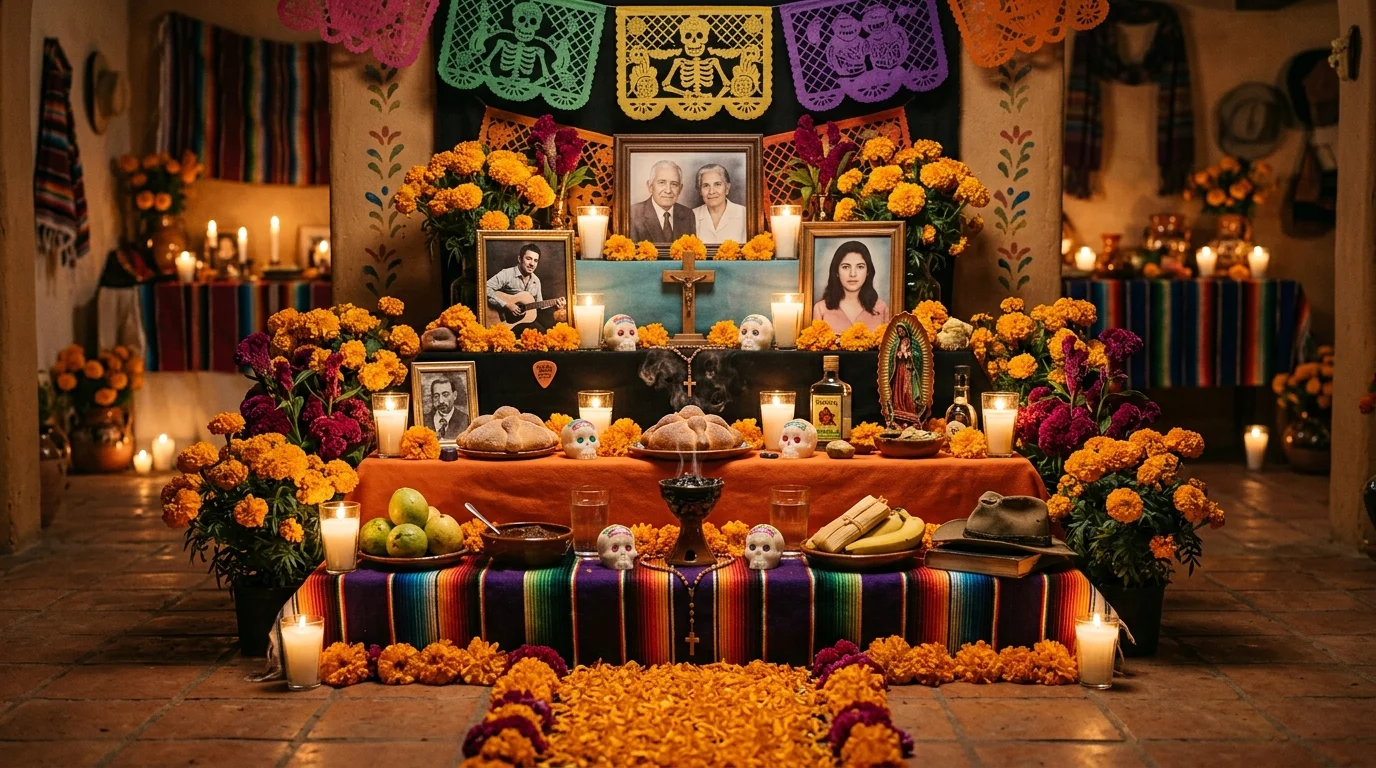
Although often translated simply as “offering,” an ofrenda usually refers to the entire altar and the meaningful items placed upon it.
Simple Meaning
An ofrenda is:
- A tribute to loved ones
- A memorial altar
- A symbolic welcome for returning spirits
- A celebration of life and family memories
- An important cultural and spiritual tradition
📜 Origin and History of the Ofrenda
The tradition of creating ofrendas has roots in ancient Indigenous cultures of Mesoamerica, including the Aztec, Maya, and other Indigenous peoples. These communities held ceremonies to honor ancestors and believed that maintaining a connection with the deceased was an important part of life.
After the arrival of Spanish colonists in the 16th century, Indigenous customs blended with Catholic traditions, particularly All Saints’ Day and All Souls’ Day. Over time, this cultural blending gave rise to the modern celebration of Día de los Muertos, during which families create ofrendas to remember those who have passed away.
Today, ofrendas are found not only in Mexico but also in many communities around the world that celebrate Mexican heritage.
🕯️ What Is the Purpose of an Ofrenda?
An ofrenda is created to honor and remember loved ones who have died.
Many families believe the altar symbolically welcomes the spirits of the deceased during Día de los Muertos, allowing them to visit their families.
The tradition emphasizes:
- Love
- Remembrance
- Family
- Gratitude
- Cultural heritage
- Celebration of life
Rather than being a symbol of fear or sadness, an ofrenda reflects joyful remembrance and respect.
🌺 Common Items Found on an Ofrenda
Every altar is unique, but many include similar symbolic items.
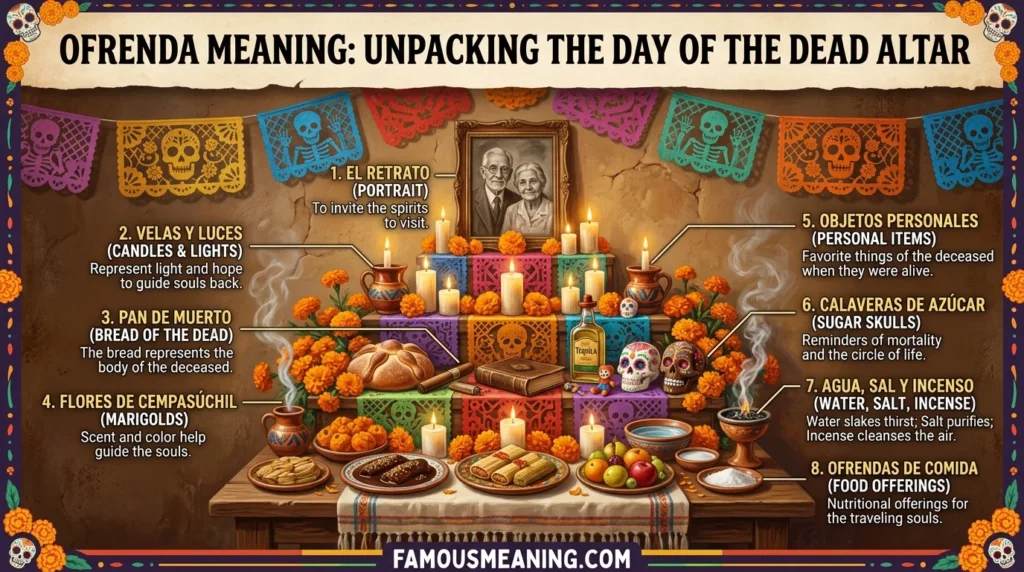
Photographs
Pictures help honor the individual being remembered.
Marigolds (Cempasúchil)
Their bright orange color and fragrance are traditionally believed to help guide spirits to the altar.
Candles
Candles symbolize hope, remembrance, and light.
Favorite Foods and Drinks
Families often place foods and beverages that their loved one enjoyed during life.
Examples include:
- Tamales
- Mole
- Fruit
- Bread
- Coffee
- Water
- Traditional beverages
Pan de Muerto
This special bread is commonly prepared during Día de los Muertos and placed on many ofrendas.
Sugar Skulls (Calaveras)
Decorated sugar skulls symbolize remembrance and the cycle of life.
Personal Belongings
Favorite books, musical instruments, clothing, toys, or hobbies may be included to reflect the person’s life and personality.
🌈 Symbolism of an Ofrenda
Each object has symbolic meaning.
| Item | Symbolism |
|---|---|
| Candles | Light and guidance |
| Marigolds | Guiding spirits home |
| Water | Refreshment for the journey |
| Food | Hospitality and remembrance |
| Photographs | Honoring loved ones |
| Sugar skulls | Acceptance of life’s cycle |
| Pan de Muerto | Shared tradition and remembrance |
| Personal items | Celebrating individuality |
🎉 Ofrenda and Día de los Muertos
The ofrenda is one of the most recognizable parts of Día de los Muertos (Day of the Dead).
This celebration typically takes place on November 1 and November 2.
Families may:
- Build altars at home.
- Visit cemeteries.
- Decorate graves with flowers.
- Share meals.
- Tell stories about loved ones.
- Celebrate family traditions.
The focus is on remembrance rather than mourning.
🌍 Is an Ofrenda Religious?
An ofrenda can have both spiritual and cultural significance.
For many people, it reflects family traditions and cultural heritage. For others, it also has religious meaning because of the historical blending of Indigenous beliefs with Catholic practices.
Not every family observes the tradition in exactly the same way.
❌ Common Misunderstandings
Many people mistakenly believe:
- An ofrenda is meant to worship the dead. ❌
- It’s only for religious ceremonies. ❌
- Every altar must follow identical rules. ❌
- It’s a Halloween decoration. ❌
In reality, an ofrenda is a respectful cultural tradition centered on remembrance, love, and honoring ancestors.
📚 Similar Cultural Traditions
| Tradition | Purpose |
|---|---|
| Ofrenda | Honoring deceased loved ones |
| Memorial altar | Remembering family members |
| Ancestor shrine | Honoring ancestors |
| Remembrance ceremony | Celebrating loved ones |
| Family memorial | Preserving memories |
Each tradition reflects different cultural and spiritual beliefs.