
🌍 What Does Climate Mean?
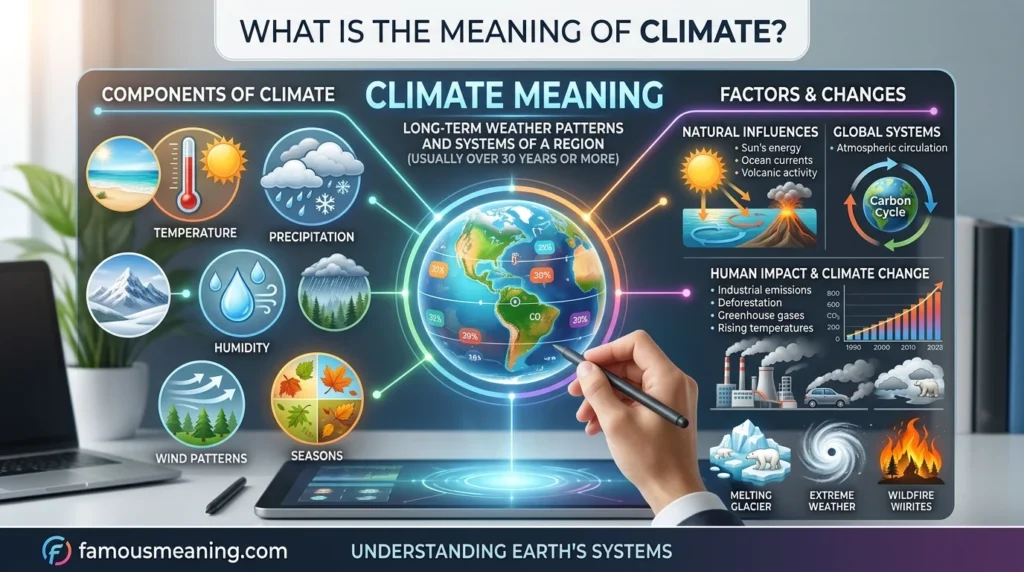
Climate describes the typical weather conditions that a place experiences over many years.
Quick Definition
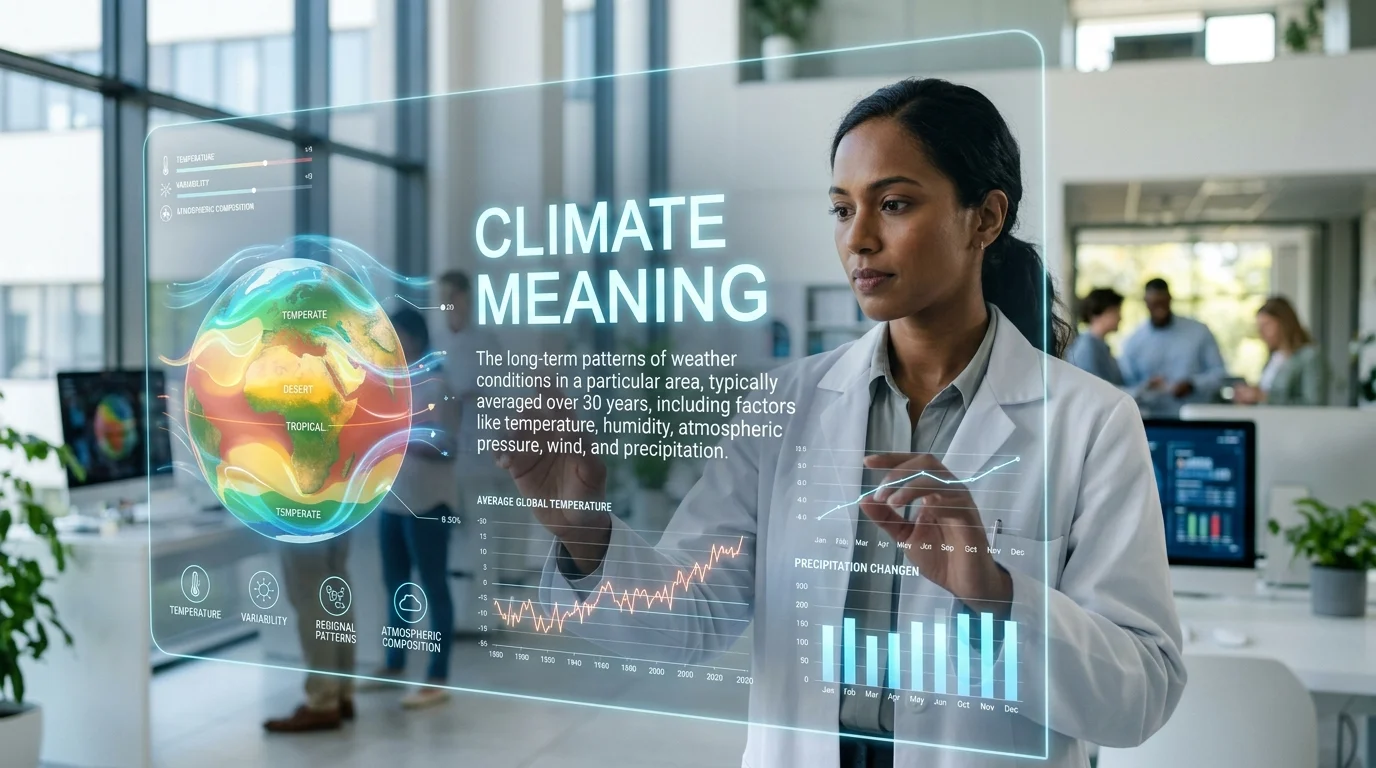
Climate (noun): The long-term average of weather conditions, including temperature, precipitation, humidity, wind, and seasonal patterns, in a particular region.
Simple Meaning
Climate refers to:
- Long-term weather patterns
- Average temperature
- Typical rainfall
- Seasonal conditions
- Environmental characteristics
Unlike daily weather, climate changes gradually over decades.
☀️ Climate vs. Weather
One of the most common misunderstandings is confusing climate with weather.
| Climate | Weather |
|---|---|
| Long-term patterns | Short-term conditions |
| Measured over decades | Changes daily or hourly |
| Predicts typical conditions | Describes current conditions |
| Example: Tropical climate | Example: Rain today |
Example
- Weather: “It’s raining this afternoon.”
- Climate: “This region usually has rainy summers.”
A simple way to remember the difference is:
Weather is what you experience today. Climate is what you expect over many years.
🌎 Types of Climate
Scientists classify climates into several major categories.
Tropical Climate
Characteristics:
- Hot temperatures year-round
- Heavy rainfall
- High humidity
Found near the Equator.
Examples:
- Brazil
- Indonesia
- Malaysia
Dry Climate
Features include:
- Low rainfall
- Hot deserts or cold deserts
- Sparse vegetation
Examples:
- Sahara Desert
- Arabian Desert
Temperate Climate
Characteristics:
- Mild summers
- Cool winters
- Moderate rainfall
Common in much of Europe and parts of North America.
Continental Climate
Features:
- Warm summers
- Cold winters
- Large seasonal temperature differences
Found in inland regions far from oceans.
Polar Climate
Characteristics:
- Extremely cold temperatures
- Ice and snow for much of the year
- Short summers
Examples:
- Antarctica
- Greenland
🌦️ Elements of Climate
Climate is determined by several factors.
Temperature
The average warmth or coldness of an area.
Rainfall
The amount of precipitation received throughout the year.
Humidity
The amount of moisture in the air.
Wind
Prevailing wind patterns influence local climate.
Sunshine
The amount of solar energy reaching Earth’s surface.
🌍 Factors That Affect Climate
Several natural factors influence climate.
Latitude
Areas closer to the Equator receive more direct sunlight and are generally warmer.
Altitude
Higher elevations usually have cooler temperatures.
Distance from Oceans
Large bodies of water help moderate temperatures.
Ocean Currents
Warm and cold currents influence coastal climates.
Mountains
Mountain ranges can block rainfall and create different climates on each side.
🌱 Why Is Climate Important?
Climate affects nearly every aspect of life.
It influences:
- Agriculture
- Water resources
- Wildlife habitats
- Human health
- Energy use
- Tourism
- Transportation
- Ecosystems
Understanding climate helps communities prepare for long-term environmental conditions.
🌡️ What Is Climate Change?
Climate change refers to long-term changes in Earth’s average climate patterns. Scientists have found that the planet’s average temperature has increased significantly over the past century, largely because of increased greenhouse gas emissions from human activities such as burning fossil fuels, deforestation, and certain industrial processes.
Climate change can contribute to:
- More frequent heat waves
- Changes in rainfall patterns
- Rising sea levels
- Melting glaciers and ice sheets
- Increased risk of some extreme weather events
The extent and local impacts vary by region, and scientists continue to study these changes.
📝 Examples of Climate in Sentences
- Canada has a colder climate than many tropical countries.
- The desert climate receives very little rainfall.
- Farmers depend on the local climate for successful crops.
- Scientists study climate to understand long-term environmental changes.
- The city’s climate is mild throughout the year.
- Coastal regions often have more moderate climates.
- Climate influences the types of plants that can grow in an area.
- Different climates support different ecosystems.
⚠️ Common Mistakes
Many people mistakenly believe:
- Climate and weather mean the same thing. ❌
- Climate changes from day to day. ❌
- Every region has the same climate. ❌
- Climate refers only to temperature. ❌
In reality, climate includes many long-term weather patterns and environmental conditions.
📚 Synonyms
| Word | Meaning |
|---|---|
| Weather pattern | Long-term atmospheric conditions |
| Atmospheric conditions | State of the atmosphere over time |
| Environment | Natural surroundings (context-dependent) |
| Meteorological conditions | Scientific description of weather and climate |
| Regional weather | Typical weather in an area |