What Does “Hoarding” Mean?
At its simplest, hoarding means accumulating and keeping possessions, often in large quantities, while being unwilling or unable to discard them.
The items being saved may include:
- Clothes
- Books
- Newspapers
- Food
- Household goods
- Collectibles
- Electronics
- Documents
- Packaging
- Sentimental items
In everyday language, people may say someone is “hoarding” if they buy or store far more than they need. In psychology, however, hoarding has a more specific meaning.
Quick Definition
Hoarding (noun):
The act of collecting and keeping possessions in excessive amounts, especially when discarding them is difficult or causes significant distress.
Literal Meaning
The literal meaning of hoarding is storing or accumulating items for future use.
Historically, people hoarded valuable goods such as:
- Food
- Grain
- Coins
- Gold
- Weapons
- Supplies
In many situations, storing extra resources was considered practical or even necessary for survival.
Today, however, the word often suggests keeping more than is reasonably needed.
What Does Hoarding Usually Mean Today?
In modern English, hoarding commonly refers to one of two situations:
1. Stockpiling Supplies
Someone buys or stores unusually large quantities of goods.
Examples include:
- Buying months’ worth of toilet paper.
- Filling a garage with bottled water before a hurricane.
- Purchasing large amounts of canned food.
This type of hoarding may be temporary and related to emergencies or fear of shortages.
2. Hoarding Disorder
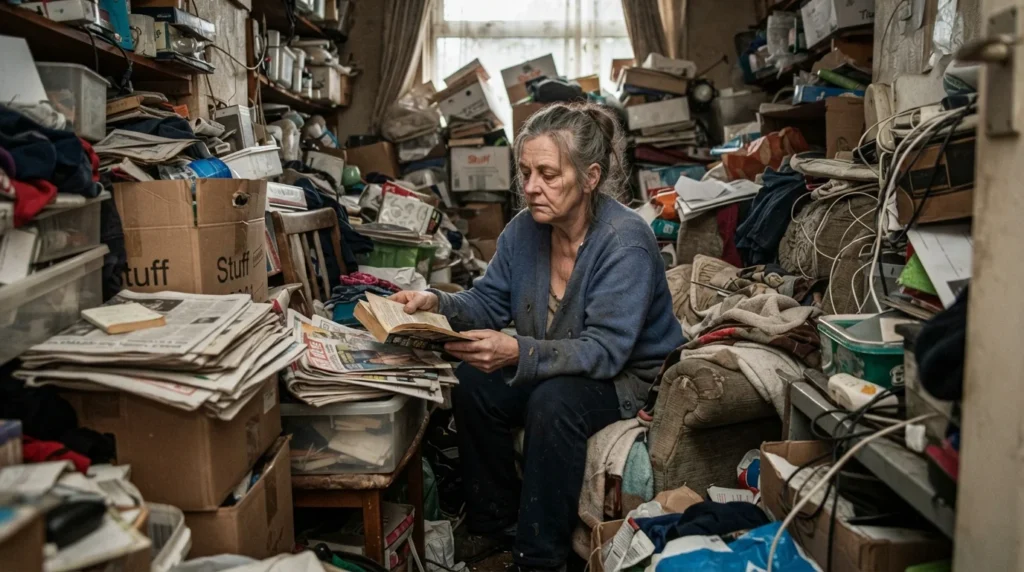
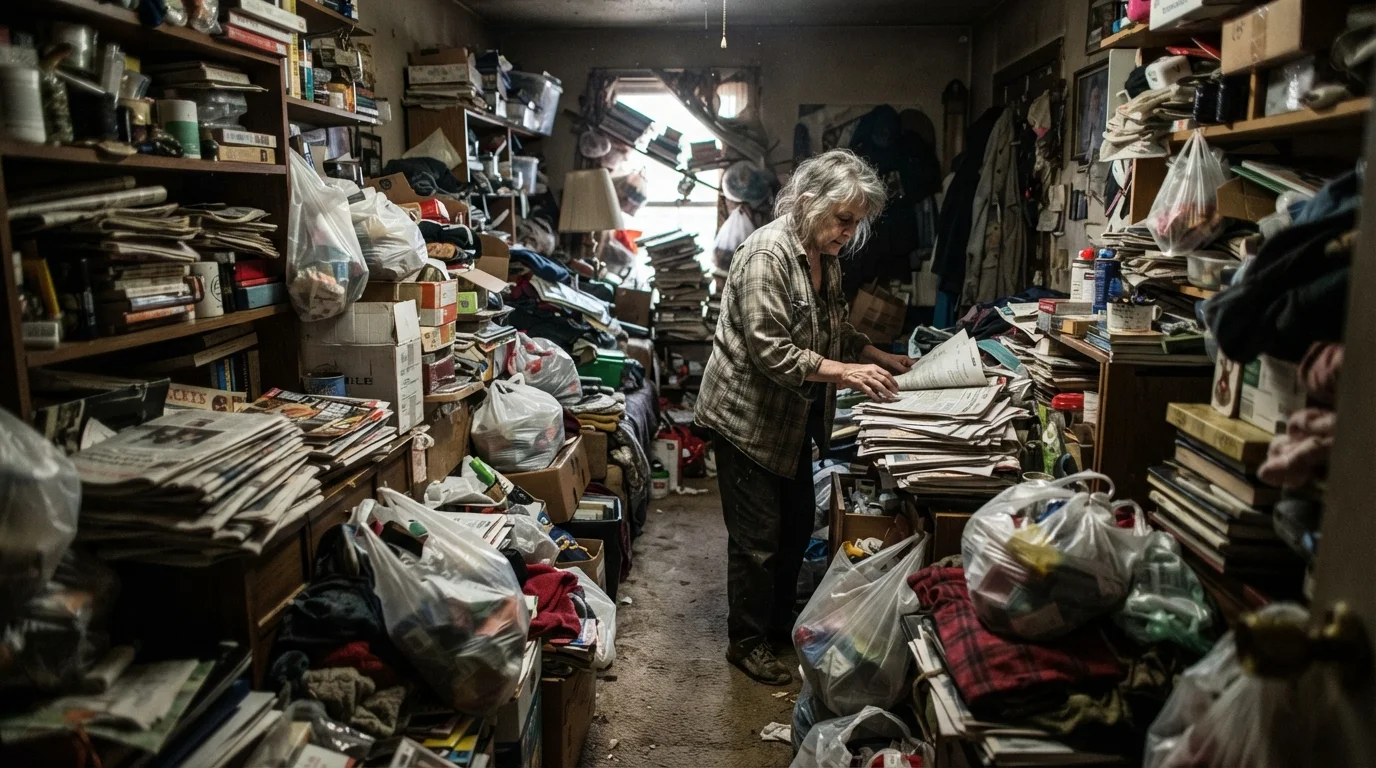
Mental health professionals use the term to describe a condition in which a person has persistent difficulty discarding possessions, regardless of their actual value.
As a result:
- Living spaces become cluttered.
- Daily activities become difficult.
- Relationships may be affected.
- Safety risks can increase.
This goes beyond simply being messy or disorganized.
Different Types of Hoarding
Not all hoarding looks the same. The behavior can involve many different kinds of possessions.
Object Hoarding
The most common type.
People accumulate:
- Clothing
- Furniture
- Paperwork
- Toys
- Boxes
- Household items
Food Hoarding
Some individuals store excessive amounts of food because they fear running out or wasting it.
This may involve:
- Pantry shelves packed with canned goods.
- Expired food kept “just in case.”
- Multiple freezers filled with food.
Animal Hoarding
Animal hoarding occurs when someone keeps more animals than they can properly care for.
This can affect the health and welfare of both the animals and the owner.
Digital Hoarding
Modern technology has introduced a newer form of hoarding.
Examples include:
- Thousands of unread emails.
- Tens of thousands of photos.
- Duplicate files.
- Unused apps.
- Massive downloads that are never organized.
Although digital clutter doesn’t occupy physical space, it can still become overwhelming.
Emotional Hoarding
Some people struggle to let go of sentimental possessions because of the memories attached to them.
Examples include:
- Childhood toys.
- Old greeting cards.
- Clothing belonging to loved ones.
- Broken gifts.
- Family keepsakes.
Holding onto meaningful items is normal, but it becomes problematic if it significantly interferes with daily life.
Hoarding vs. Collecting
People often confuse hoarding with collecting, but they are not the same.
| Collecting | Hoarding |
|---|---|
| Organized | Often disorganized |
| Purposeful | Excessive accumulation |
| Enjoyable hobby | May cause distress |
| Items usually have value | Items may have little or no value |
| Doesn’t usually interfere with daily life | Can affect health, safety, or relationships |
For example, someone who collects stamps or coins may carefully organize and display their collection. By contrast, hoarding often involves difficulty discarding items regardless of their usefulness or value.
What Tone Does It Convey?
The word hoarding is generally neutral to negative, depending on the context.
Neutral
“Many families were hoarding bottled water before the storm.”
Here, the word simply describes stockpiling supplies.
Negative
“The apartment became unsafe because of severe hoarding.”
This refers to a situation that may require intervention.
Medical
“The patient was diagnosed with hoarding disorder.”
Here, the term is used clinically without judgment.
Humorous
“I think I’m hoarding coffee mugs.”
Friends sometimes use the word jokingly to describe owning too many similar items.
What Does Hoarding Mean in Different Contexts?
Although the core idea remains the same, the meaning of hoarding changes slightly depending on the context.
In Mental Health
Mental health professionals use hoarding to describe behaviors associated with hoarding disorder, a recognized condition characterized by persistent difficulty discarding possessions.
Treatment may include therapy, practical support, and, in some cases, medication if other conditions are also present.
In Everyday Life
People often use the word casually.
Examples:
“I’m hoarding snacks for movie night.”
“We’re hoarding blankets for winter.”
In these cases, the speaker usually means they’re storing extra supplies rather than describing a mental health condition.
During Emergencies
The word frequently appears in news reports during natural disasters or public emergencies.
Examples include:
- Panic buying
- Fuel hoarding
- Water hoarding
- Medicine hoarding
People may purchase more supplies than necessary because they fear shortages.
In Business and Economics
Economists sometimes discuss hoarding in relation to markets.
Examples:
- Hoarding cash
- Hoarding inventory
- Hoarding essential goods
Businesses may temporarily store products in anticipation of future demand or higher prices.
On Social Media
Online, hoarding is sometimes used humorously or as self-deprecating humor.
Examples:
“I’m hoarding screenshots I’ll never look at again.”
“I’m definitely hoarding skincare products.”
These posts often exaggerate everyday habits for comedic effect.
Origin and History of Hoarding
The word hoard has existed in English for many centuries.
It comes from the Old English word hord, meaning treasure, valuable possessions, or hidden store of wealth.
Historically, people often hid valuable items to protect them from theft or conflict.
Over time, the meaning expanded to include storing large quantities of goods or possessions.
Eventually, hoarding became the noun describing the act of accumulating and keeping those items.
How the Meaning Has Changed
Originally, hoarding often referred to protecting valuable resources.
Today, the word has broadened to include:
- Emergency stockpiling
- Excessive shopping
- Mental health conditions
- Digital clutter
- Everyday jokes about owning too much of something
Despite these newer uses, the central idea remains the same: keeping more than is immediately needed or being reluctant to let go of possessions.
Is the Origin Certain?
Yes.
The origin of hoarding is well documented through historical English records, tracing back to the Old English word hord. Unlike many modern slang terms, its history is clearly established and has been studied by linguists for centuries.
How People Actually Use “Hoarding”
In everyday conversations, the word hoarding is used in several different ways.
Sometimes it’s serious.
Sometimes it’s humorous.
Sometimes it’s simply descriptive.
Most People Use It When…
- Talking about excessive clutter.
- Discussing mental health.
- Referring to panic buying during emergencies.
- Describing someone who saves everything.
- Joking about owning too many books, shoes, or coffee mugs.
- Talking about digital clutter like emails or photos.
You’ll Often See It In…
- Health articles
- Psychology websites
- News reports
- TV documentaries
- Social media posts
- Home organization blogs
- Minimalism discussions
- Personal finance articles
Understanding the context is important because hoarding can refer to anything from temporarily stocking up on supplies to a serious mental health condition that affects a person’s quality of life.
What Does “Hoarding” Mean?
At its simplest, hoarding means accumulating and keeping possessions, often in large quantities, while being unwilling or unable to discard them.
The items being saved may include:
- Clothes
- Books
- Newspapers
- Food
- Household goods
- Collectibles
- Electronics
- Documents
- Packaging
- Sentimental items
In everyday language, people may say someone is “hoarding” if they buy or store far more than they need. In psychology, however, hoarding has a more specific meaning.
Quick Definition
Hoarding (noun):
The act of collecting and keeping possessions in excessive amounts, especially when discarding them is difficult or causes significant distress.
Literal Meaning
The literal meaning of hoarding is storing or accumulating items for future use.
Historically, people hoarded valuable goods such as:
- Food
- Grain
- Coins
- Gold
- Weapons
- Supplies
In many situations, storing extra resources was considered practical or even necessary for survival.
Today, however, the word often suggests keeping more than is reasonably needed.
What Does Hoarding Usually Mean Today?
In modern English, hoarding commonly refers to one of two situations:
1. Stockpiling Supplies
Someone buys or stores unusually large quantities of goods.
Examples include:
- Buying months’ worth of toilet paper.
- Filling a garage with bottled water before a hurricane.
- Purchasing large amounts of canned food.
This type of hoarding may be temporary and related to emergencies or fear of shortages.
2. Hoarding Disorder
Mental health professionals use the term to describe a condition in which a person has persistent difficulty discarding possessions, regardless of their actual value.
As a result:
- Living spaces become cluttered.
- Daily activities become difficult.
- Relationships may be affected.
- Safety risks can increase.
This goes beyond simply being messy or disorganized.
Different Types of Hoarding
Not all hoarding looks the same. The behavior can involve many different kinds of possessions.
Object Hoarding
The most common type.
People accumulate:
- Clothing
- Furniture
- Paperwork
- Toys
- Boxes
- Household items
Food Hoarding
Some individuals store excessive amounts of food because they fear running out or wasting it.
This may involve:
- Pantry shelves packed with canned goods.
- Expired food kept “just in case.”
- Multiple freezers filled with food.
Animal Hoarding
Animal hoarding occurs when someone keeps more animals than they can properly care for.
This can affect the health and welfare of both the animals and the owner.
Digital Hoarding
Modern technology has introduced a newer form of hoarding.
Examples include:
- Thousands of unread emails.
- Tens of thousands of photos.
- Duplicate files.
- Unused apps.
- Massive downloads that are never organized.
Although digital clutter doesn’t occupy physical space, it can still become overwhelming.
Emotional Hoarding
Some people struggle to let go of sentimental possessions because of the memories attached to them.
Examples include:
- Childhood toys.
- Old greeting cards.
- Clothing belonging to loved ones.
- Broken gifts.
- Family keepsakes.
Holding onto meaningful items is normal, but it becomes problematic if it significantly interferes with daily life.
Hoarding vs. Collecting
People often confuse hoarding with collecting, but they are not the same.
| Collecting | Hoarding |
|---|---|
| Organized | Often disorganized |
| Purposeful | Excessive accumulation |
| Enjoyable hobby | May cause distress |
| Items usually have value | Items may have little or no value |
| Doesn’t usually interfere with daily life | Can affect health, safety, or relationships |
For example, someone who collects stamps or coins may carefully organize and display their collection. By contrast, hoarding often involves difficulty discarding items regardless of their usefulness or value.
What Tone Does It Convey?
The word hoarding is generally neutral to negative, depending on the context.
Neutral
“Many families were hoarding bottled water before the storm.”
Here, the word simply describes stockpiling supplies.
Negative
“The apartment became unsafe because of severe hoarding.”
This refers to a situation that may require intervention.
Medical
“The patient was diagnosed with hoarding disorder.”
Here, the term is used clinically without judgment.
Humorous
“I think I’m hoarding coffee mugs.”
Friends sometimes use the word jokingly to describe owning too many similar items.
What Does Hoarding Mean in Different Contexts?
Although the core idea remains the same, the meaning of hoarding changes slightly depending on the context.
In Mental Health
Mental health professionals use hoarding to describe behaviors associated with hoarding disorder, a recognized condition characterized by persistent difficulty discarding possessions.
Treatment may include therapy, practical support, and, in some cases, medication if other conditions are also present.
In Everyday Life
People often use the word casually.
Examples:
“I’m hoarding snacks for movie night.”
“We’re hoarding blankets for winter.”
In these cases, the speaker usually means they’re storing extra supplies rather than describing a mental health condition.
During Emergencies
The word frequently appears in news reports during natural disasters or public emergencies.
Examples include:
- Panic buying
- Fuel hoarding
- Water hoarding
- Medicine hoarding
People may purchase more supplies than necessary because they fear shortages.
In Business and Economics
Economists sometimes discuss hoarding in relation to markets.
Examples:
- Hoarding cash
- Hoarding inventory
- Hoarding essential goods
Businesses may temporarily store products in anticipation of future demand or higher prices.
On Social Media
Online, hoarding is sometimes used humorously or as self-deprecating humor.
Examples:
“I’m hoarding screenshots I’ll never look at again.”
“I’m definitely hoarding skincare products.”
These posts often exaggerate everyday habits for comedic effect.
Origin and History of Hoarding
The word hoard has existed in English for many centuries.
It comes from the Old English word hord, meaning treasure, valuable possessions, or hidden store of wealth.
Historically, people often hid valuable items to protect them from theft or conflict.
Over time, the meaning expanded to include storing large quantities of goods or possessions.
Eventually, hoarding became the noun describing the act of accumulating and keeping those items.
How the Meaning Has Changed
Originally, hoarding often referred to protecting valuable resources.
Today, the word has broadened to include:
- Emergency stockpiling
- Excessive shopping
- Mental health conditions
- Digital clutter
- Everyday jokes about owning too much of something
Despite these newer uses, the central idea remains the same: keeping more than is immediately needed or being reluctant to let go of possessions.
Is the Origin Certain?
Yes.
The origin of hoarding is well documented through historical English records, tracing back to the Old English word hord. Unlike many modern slang terms, its history is clearly established and has been studied by linguists for centuries.
How People Actually Use “Hoarding”
In everyday conversations, the word hoarding is used in several different ways.
Sometimes it’s serious.
Sometimes it’s humorous.
Sometimes it’s simply descriptive.
Most People Use It When…
- Talking about excessive clutter.
- Discussing mental health.
- Referring to panic buying during emergencies.
- Describing someone who saves everything.
- Joking about owning too many books, shoes, or coffee mugs.
- Talking about digital clutter like emails or photos.
You’ll Often See It In…
- Health articles
- Psychology websites
- News reports
- TV documentaries
- Social media posts
- Home organization blogs
- Minimalism discussions
- Personal finance articles
Understanding the context is important because hoarding can refer to anything from temporarily stocking up on supplies to a serious mental health condition that affects a person’s quality of life.