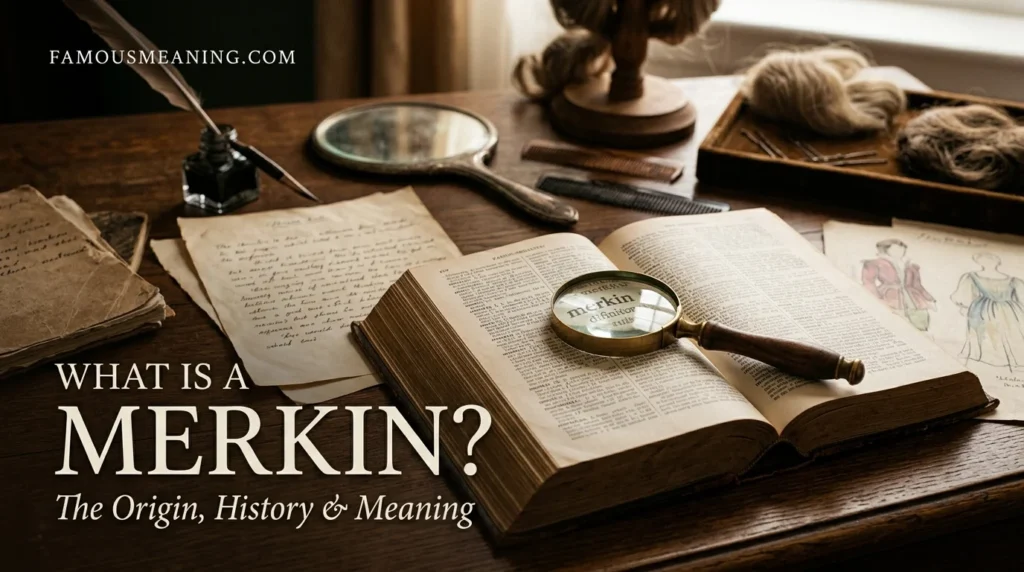

What Does “Merkin” Mean?
Quick Definition
A merkin is an artificial wig designed to resemble natural pubic hair. It is typically attached to the skin using a skin-safe adhesive and is most often used for theatrical, film, television, or costume purposes.
Literal Meaning
The word merkin specifically refers to the artificial hairpiece itself. It does not describe a hairstyle, fashion trend, or slang expression.
Most Common Meaning
Today, merkin most commonly refers to a prop or costume accessory used by:
- Film productions
- Television shows
- Theater performances
- Costume departments
- Special effects and makeup artists
Its purpose may include maintaining visual continuity, matching a historical period, or preserving modesty while achieving a particular appearance on screen.
What Does Merkin Mean in Different Contexts?
Film and Television
In movies and television, a merkin may be used when:
- An actor needs a historically accurate appearance.
- Makeup or prosthetics cover natural hair.
- A production requires a consistent look between scenes.
- Costume or makeup design calls for added or altered hair.
Theater
Stage productions sometimes use merkins to match period costumes or character designs.
Costume Design
Professional costume designers may use merkins as part of a complete character transformation.
Historical Context
Historically, merkins were sometimes worn for practical or cosmetic reasons, including covering hair loss or maintaining a desired appearance. Their historical use predates modern filmmaking by several centuries.
Origin and History of Merkin
Where Did the Word Come From?
The exact origin of the word merkin is uncertain, but historical records show it has been part of the English language since at least the 15th century.
Linguists do not completely agree on its earliest linguistic roots, so it’s best not to claim a single definitive origin.
Historical Uses
Centuries ago, merkins served practical purposes in addition to cosmetic ones. Over time, improvements in hygiene, medicine, and fashion made everyday use uncommon.
Modern Usage
Today, the word is rarely encountered outside discussions of:
- Film production
- Costume design
- Historical clothing
- Makeup artistry
- Entertainment industry interviews
How People Actually Use the Word “Merkin”
Most people never use the word in everyday conversation.
You’ll usually encounter it when:
- Reading movie trivia
- Watching behind-the-scenes documentaries
- Listening to interviews with costume designers
- Studying theater or film production
- Reading articles about unusual English words
Because it’s a specialized term, many English speakers are unfamiliar with it until they come across it in entertainment-related contexts.
Real Examples of “Merkin” in Conversations
Example 1
Person A: I learned a new word today—merkin.
Person B: It’s an artificial pubic hair wig used in films and theater.
Meaning: Explaining the definition.
Example 2
Person A: Why did the makeup department need a merkin?
Person B: They wanted a historically accurate look.
Meaning: Used as part of costume design.
Example 3
Person A: I heard that term in an actor interview.
Person B: They were probably talking about filming a period drama.
Meaning: Common in production discussions.
Example 4
Person A: Is a merkin still used today?
Person B: Yes, mainly in the entertainment industry.
Meaning: Modern professional use.
Example 5
Person A: Is “merkin” slang?
Person B: No, it’s a real dictionary word.
Meaning: Clarifying that it’s a standard English term.
Example 6
Person A: I saw the word in movie trivia.
Person B: Costume departments sometimes use them during filming.
Meaning: Behind-the-scenes production reference.
Example 7
Person A: Why not use natural hair?
Person B: Productions sometimes need a specific appearance or continuity.
Meaning: Explaining practical reasons.
Example 8
Person A: I’ve never heard that word before.
Person B: It’s uncommon unless you’re interested in film or theater.
Meaning: Specialized vocabulary.
Example 9
Person A: Is it still manufactured?
Person B: Yes, for professional costume and makeup work.
Meaning: Referring to current industry use.
Example 10
Person A: That’s one of the strangest English words I’ve learned.
Person B: It definitely surprises most people!
Meaning: Casual reaction to an unusual term.
Common Mistakes and Misunderstandings
Mistake 1: Merkin Is Internet Slang
False.
A merkin is a standard English dictionary word, not a texting abbreviation or social media slang.
Mistake 2: It’s Commonly Used in Daily Conversation
Not true.
Most people rarely use or hear the word unless they’re discussing film, theater, or costume design.
Mistake 3: It’s Only a Historical Item
Incorrect.
Although it has historical origins, merkins are still used today in professional entertainment and costume production.
Similar Terms and Related Words
| Term | Meaning | Difference |
|---|---|---|
| Wig | Artificial hair for the head | Covers the scalp |
| Hairpiece | Artificial hair addition | General term for various hairpieces |
| Prosthetic | Artificial body part or enhancement | Broader category used in film and medicine |
| Costume | Clothing for a character or performance | Includes many accessories |
| Makeup Prosthetic | Special effects makeup appliance | Alters appearance beyond hair |
| Wardrobe | Clothing used in productions | Not limited to hairpieces |
| Special Effects Makeup | Makeup creating realistic effects | May include prosthetics and hairpieces |
| Theatrical Makeup | Makeup for stage performances | Broader than a merkin |
| Costume Accessory | Item completing a costume | General category |
| Period Costume | Clothing matching a historical era | May include a merkin if appropriate |
Internal linking opportunities: wig meaning, prosthetic meaning, costume meaning, theatrical makeup meaning, period drama meaning.
Is “Merkin” Positive, Negative, or Neutral?
The word merkin is generally neutral.
Its tone depends entirely on the context.
Neutral Uses
- Costume design
- Theater
- Film production
- Historical discussion
- Dictionary definitions
Humorous Uses
Because many people are unfamiliar with the word, it sometimes appears in trivia lists or conversations about unusual English vocabulary.
Offensive Uses
The word itself is not offensive, but because it refers to intimate anatomy, it may be considered inappropriate in certain formal or professional conversations unrelated to costume or medical contexts.
Should You Use the Word “Merkin”?
Use It If
- You’re discussing film or theater production.
- You’re talking about historical costumes.
- You’re explaining an English vocabulary term.
- You’re describing professional costume accessories.
Avoid It If
- The audience may not understand the specialized meaning.
- A more general term like “costume hairpiece” communicates your point just as well.
- The context is highly formal and the anatomical reference isn’t relevant.