

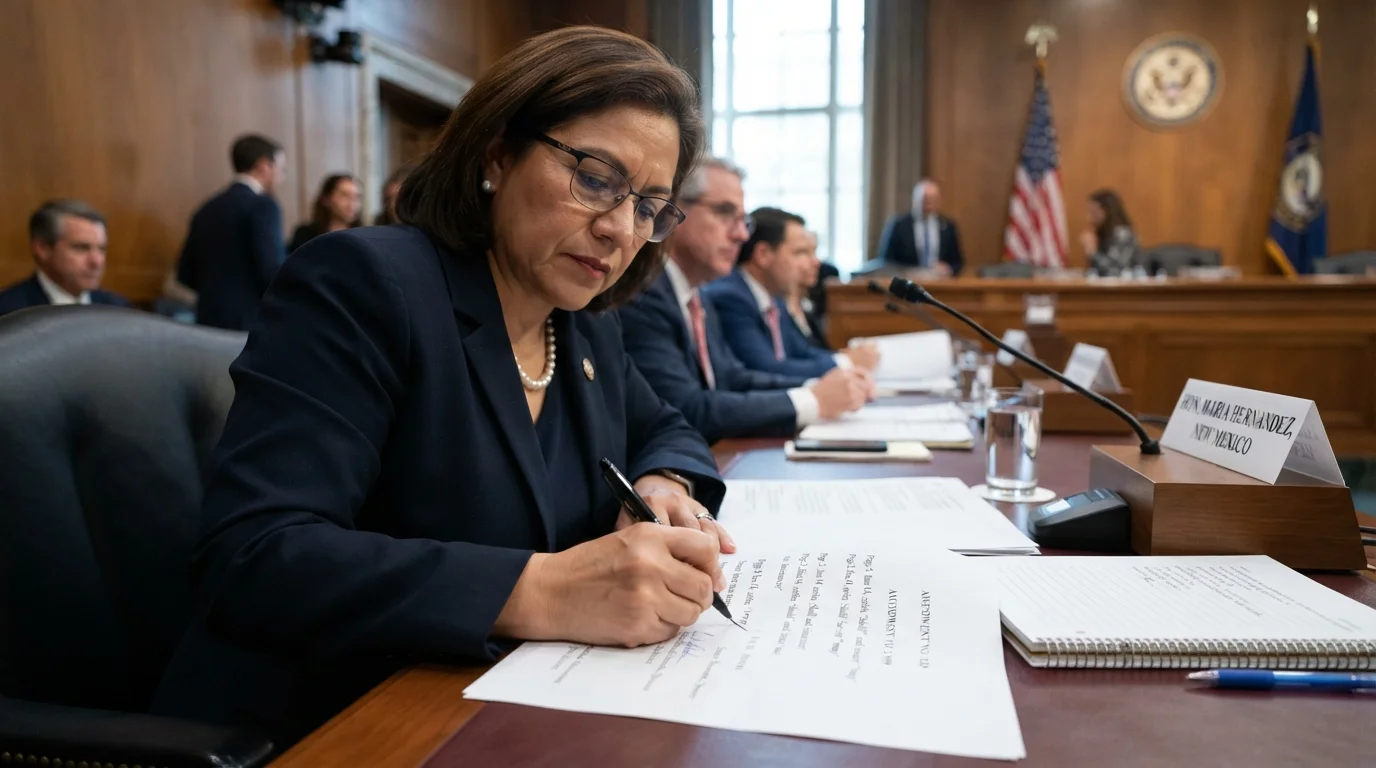
What Does “Amendment” Mean?
At its simplest, an amendment is a change made to improve or correct something.
Rather than replacing an entire document, an amendment updates specific parts while leaving the rest unchanged.
The word can refer to:
- A change to a law
- A revision to a constitution
- An update to a contract
- A correction in a written document
- An addition to rules or policies
The exact meaning depends on the context, but the core idea is always the same: making an official change.
Quick Definition
Amendment (noun):
A formal change, revision, correction, or addition made to an existing document, law, agreement, policy, or written text.
Amend (verb):
To change, improve, revise, or correct something.
What It Usually Means in Everyday English
In everyday conversations, amendment usually refers to making improvements or corrections.
For example:
“The teacher approved an amendment to the assignment guidelines.”
This means the original guidelines were changed or updated.
Another example:
“The company announced an amendment to its vacation policy.”
Here, the business modified an existing rule rather than creating a completely new one.
Literal Meaning
The literal meaning of amendment is:
A change made to improve something.
An amendment may involve:
- Adding information
- Removing outdated content
- Correcting mistakes
- Clarifying confusing language
- Updating existing rules
Unlike rewriting something from scratch, an amendment builds on the original version.
What Tone Does It Convey?
The word amendment is generally neutral and formal.
Its tone depends on how it is used.
Legal
“The amendment was approved by Congress.”
Meaning:
A formal change to legislation.
Professional
“We issued an amendment to the contract.”
Meaning:
A business agreement was updated.
Educational
“The professor posted an amendment to the course syllabus.”
Meaning:
Course information was revised.
Administrative
“The company announced an amendment to its employee handbook.”
Meaning:
Policies were officially updated.
Everyday
“I made a few amendments before sending the report.”
Meaning:
Small corrections or improvements were made.
What Does Amendment Mean in Different Contexts?
Although the basic definition stays the same, amendment has different applications depending on the situation.
In Law
In legal settings, an amendment is an official change made to a law, regulation, or legal document.
For example:
- A legislature may amend a law.
- A judge may approve an amended complaint.
- Lawyers often file amended legal documents during court proceedings.
Legal amendments help keep laws current and address changing circumstances.
In Government
One of the most well-known uses of the word involves constitutional amendments.
A constitutional amendment changes part of a country’s constitution.
For example, in the United States, the Constitution has been amended multiple times to address important issues such as:
- Freedom of speech
- Voting rights
- Presidential term limits
- The abolition of slavery
- Equal protection under the law
These amendments shape how the government operates.
In Contracts
Businesses frequently amend contracts.
Instead of creating a brand-new agreement, both parties sign an amendment that changes specific terms.
Common contract amendments include:
- Extending deadlines
- Changing payment terms
- Updating responsibilities
- Revising project timelines
- Modifying prices
This approach saves time while preserving the original agreement.
In Business
Companies regularly issue amendments to:
- Employee policies
- Shareholder agreements
- Corporate bylaws
- Financial reports
- Partnership agreements
Business amendments help organizations adapt to new circumstances without replacing entire documents.
In Education
Schools and universities also use amendments.
Examples include:
- Updated classroom rules
- Revised grading policies
- Changes to academic calendars
- Modified course requirements
- Corrected exam schedules
Students may receive amendment notices throughout the school year.
In Everyday Writing
Outside formal settings, people use amendment to describe revisions to documents.
Examples include:
- Editing reports
- Updating proposals
- Correcting presentations
- Revising meeting minutes
- Improving written instructions
Although “edit” is often used instead, amendment emphasizes an official or documented change.
Origin and History of Amendment
The word amendment has a long history that stretches back hundreds of years.
Unlike modern slang or internet abbreviations, it developed through legal and literary traditions.
Where Does the Word Come From?
The English word amendment comes from the verb amend.
Amend originates from the Old French word amender, meaning:
“To improve,” “to correct,” or “to make better.”
That French term ultimately traces back to the Latin phrase emendare, which means:
“To correct faults” or “to free from error.”
This origin reflects the word’s core purpose: making improvements rather than replacing something entirely.
Early English Usage
The word entered English during the Middle Ages and gradually became common in legal, governmental, and religious writing.
Early uses often referred to:
- Correcting written texts
- Improving laws
- Revising official documents
- Changing church regulations
Over time, the meaning expanded into many other fields.
Why Did It Become So Important?
As governments, businesses, and organizations created more written rules and agreements, they needed a practical way to update them.
Instead of rewriting entire documents, amendments allowed people to:
- Correct mistakes
- Clarify wording
- Adapt to new situations
- Reflect changing laws
- Improve existing policies
Today, amendments remain an essential part of legal systems and organizational governance around the world.
Constitutional Amendments
One reason the word became widely recognized is its connection to national constitutions.
Many countries—including the United States—have formal processes for amending their constitutions.
For example, the First Amendment to the U.S. Constitution protects freedoms such as speech, religion, the press, peaceful assembly, and petition.
Other constitutional amendments address issues like voting rights, citizenship, and presidential succession.
Because of these high-profile examples, many people first encounter the word amendment in civics or history classes.
Is the Origin Certain?
Yes.
Unlike many words with uncertain histories, the origin of amendment is well documented through Latin, Old French, and Middle English sources.
Its meaning has remained remarkably consistent over time.
Whether used in law, business, education, or everyday writing, the central idea has always been the same:
Making an official improvement or correction to something that already exists.
How People Actually Use “Amendment”
Although the word amendment sounds formal, it’s used more often than many people realize. You’ll encounter it whenever someone needs to change an existing document, rule, agreement, or policy without starting over.
Most people use the term when discussing:
- Government laws
- Business contracts
- School regulations
- Company policies
- Legal paperwork
- Official reports
- Organizational rules
You’ll often hear phrases like:
- “We need an amendment to the contract.”
- “Congress passed an amendment.”
- “The committee proposed an amendment.”
- “The report was amended before publication.”
In everyday life, people may simply say they made an amendment when they corrected or updated a formal document.
Most People Use It When…
- Revising legal documents.
- Updating contracts.
- Changing company policies.
- Correcting official reports.
- Discussing constitutional law.
- Revising written agreements.
You’ll Often See It In…
- News articles
- Government websites
- Court documents
- Business contracts
- Employment agreements
- School handbooks
- Corporate policies
- Financial filings.
Real Examples of “Amendment” in Conversations
The best way to understand the amendment meaning is to see how the word is used in real-life situations. Since it appears in legal, business, educational, and everyday contexts, the examples below cover a variety of common scenarios.
Example 1: Government
Person A: Did the new law pass?
Person B: Yes, but lawmakers added an amendment before the final vote.
Meaning: The law was modified before approval.
Why it was used: To describe an official legislative change.
Example 2: Business Contract
Manager: We need to extend the project deadline.
Lawyer: We’ll prepare an amendment to the contract.
Meaning: The original agreement will be officially updated.
Why it was used: Contract revision.
Example 3: School
Student: The due date changed.
Teacher: I posted an amendment to the syllabus yesterday.
Meaning: The course schedule was officially revised.
Why it was used: Academic update.
Example 4: Workplace
Employee: Has the vacation policy changed?
HR Manager: Yes, an amendment was added this week.
Meaning: The company’s policy has been updated.
Why it was used: Policy revision.
Example 5: Legal Case
Client: Why did my attorney file another document?
Lawyer: It’s an amended complaint that corrects several details.
Meaning: The original filing has been revised.
Why it was used: Legal procedure.
Example 6: Meeting Minutes
Employee: The budget numbers were incorrect.
Supervisor: We’ll issue an amendment before distributing the report.
Meaning: An official correction will be made.
Why it was used: Document accuracy.
Example 7: News Report
Reporter: Parliament approved the amendment after hours of debate.
Meaning: A formal legislative change was accepted.
Why it was used: Political reporting.
Example 8: Constitution
Student: What is the First Amendment?
Teacher: It’s a constitutional amendment that protects several fundamental freedoms.
Meaning: A change or addition to the Constitution.
Why it was used: Civics education.
Example 9: Email
Manager: I noticed an error in the proposal.
Employee: I’ll send an amended version this afternoon.
Meaning: The document will be corrected.
Why it was used: Professional communication.
Example 10: Company Policy
Director: We’ve updated our remote work rules.
Staff Member: Was that done through an amendment?
Director: Yes, the employee handbook has been amended.
Meaning: Existing policies were officially revised.
Why it was used: Organizational governance.
Example 11: Nonprofit Organization
Board Member: We changed our bylaws.
Volunteer: Was it a complete rewrite?
Board Member: No, just a small amendment.
Meaning: Only certain sections were modified.
Why it was used: Governance update.
Example 12: Everyday Conversation
Friend: I made a few amendments before submitting my report.
Friend 2: Good idea. It’s always worth reviewing your work.
Meaning: Small corrections and improvements were made.
Why it was used: Informal use of the word.
Common Mistakes and Misunderstandings
Although amendment is a straightforward word, it’s often misunderstood.
Mistake #1: Thinking an Amendment Replaces the Entire Document
This is one of the most common misconceptions.
Reality: An amendment changes only specific sections while leaving the rest of the original document in effect.
Mistake #2: Believing Amendments Only Apply to Laws
Many people associate the word exclusively with constitutional amendments.
Reality: Amendments are also common in:
- Contracts
- Business policies
- School rules
- Court filings
- Company handbooks
- Organizational bylaws
Mistake #3: Confusing “Amendment” with “Correction”
A correction fixes an error.
An amendment may:
- Add new information
- Remove outdated information
- Revise existing language
- Clarify confusing wording
- Correct mistakes
Not every amendment is simply a correction.
Mistake #4: Assuming Amendments Are Informal
Amendments are typically formal and documented.
In legal and business settings, they often require:
- Written approval
- Official signatures
- Recordkeeping
- Compliance with specific procedures
Mistake #5: Using “Amend” and “Edit” Interchangeably
While both involve changes, they aren’t always identical.
- Edit usually refers to improving written content.
- Amend often implies an official or legally recognized change.
Related Words and Similar Terms
| Word | Meaning | Difference |
|---|---|---|
| Amendment | Official change to an existing document | Formal revision |
| Revision | Updated version of something | Broader than an amendment |
| Modification | Change or adjustment | Can be formal or informal |
| Correction | Fixing an error | Focuses on mistakes |
| Edit | Improving written content | Usually less formal |
| Update | Bringing information current | General term |
| Addendum | Information added after completion | Supplements rather than changes existing text |
| Appendix | Additional supporting material | Doesn’t usually alter the main document |
| Clause | A section within a legal document | May itself be amended |
| Provision | A rule or condition in an agreement | Individual provisions can be amended |
Internal linking opportunities:
- Constitution Meaning
- First Amendment Explained
- Contract Meaning
- Clause Meaning
- Provision Meaning
- Statute Meaning
- Bill vs Law
- Legal Terms Glossary
Is Amendment Positive, Negative, or Neutral?
The word amendment is generally neutral.
It simply describes a formal change.
Positive Context
An amendment can improve a document by:
- Correcting mistakes
- Clarifying language
- Modernizing outdated rules
- Strengthening protections
Neutral Context
Most legal and business discussions use the term without any emotional meaning.
Example:
“The board approved an amendment.”
Negative Context
Occasionally, an amendment may be controversial if people disagree with the proposed changes.
In those cases, the controversy comes from the content of the amendment—not the word itself.
Should You Use the Word “Amendment”?
Yes, when discussing formal changes.
Use It If:
- You’re referring to laws or constitutions.
- You’re updating contracts or agreements.
- You’re describing official policy changes.
- You’re discussing legal or governmental documents.
- You’re making documented revisions to formal paperwork.
Avoid It If:
- You’re talking about casual changes in everyday conversation where simpler words like change, update, or edit sound more natural.
- The modification isn’t official or documented.
Choosing the right word depends on the level of formality and the type of document involved.