

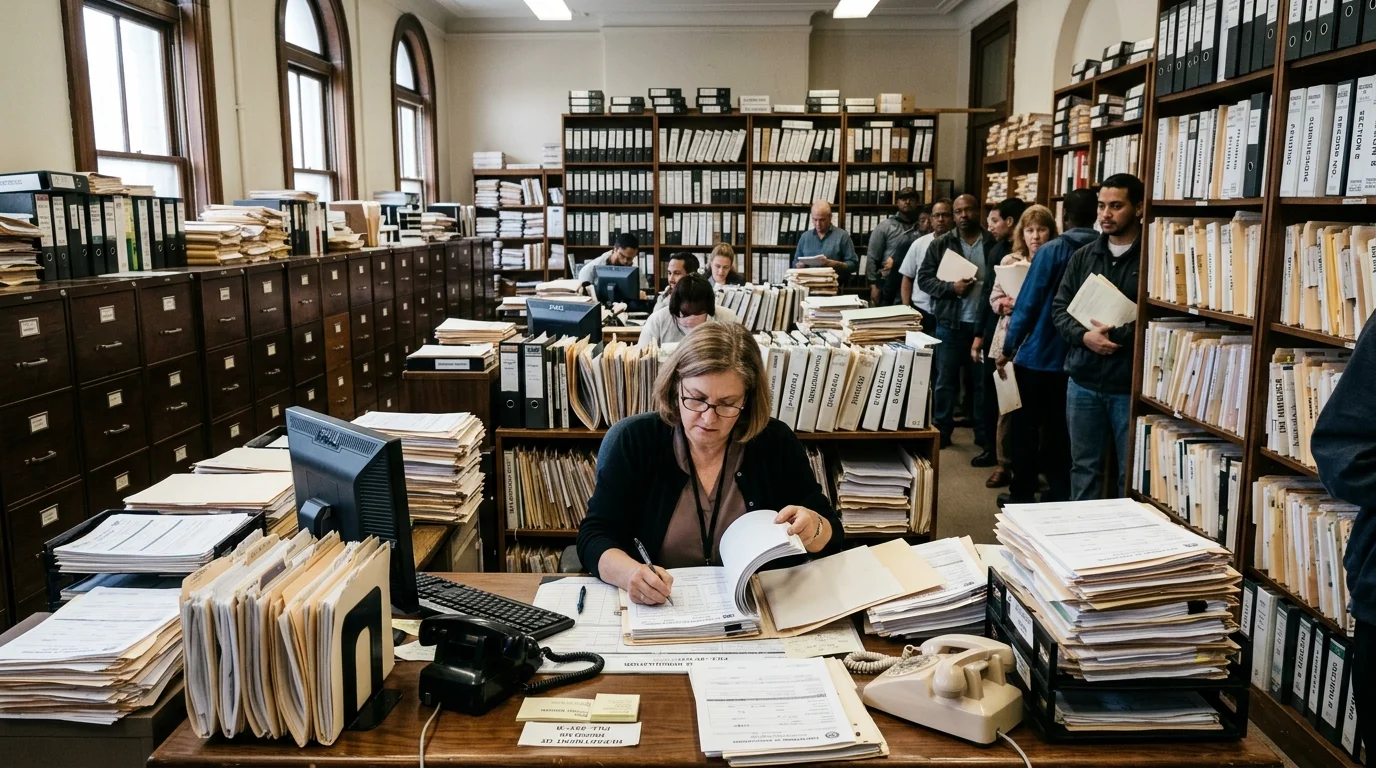
Quick Answer: What Does Bureaucracy Mean?
Bureaucracy means a system of administration based on rules, procedures, official roles, and multiple levels of authority. It is commonly associated with governments and large organizations. In everyday speech, bureaucracy often means complicated paperwork, slow approvals, or excessive administrative requirements, although formal bureaucracy can also promote consistency and accountability.
What Is the Definition of Bureaucracy?
Quick Definition
Bureaucracy is an organizational system in which people perform specialized roles according to established rules, procedures, and a hierarchy of authority.
The term can refer to:
- A formal administrative system
- Government departments and officials
- Organizational procedures
- Extensive rules and paperwork
- A complicated approval process
- The officials responsible for administration
Bureaucracy in Simple Terms
In simple terms, bureaucracy is a structured way of running an organization through rules and official procedures.
Imagine you need a permit from a government office. You might have to:
- Complete an application.
- Provide identification.
- Submit supporting documents.
- Pay a fee.
- Wait for an official review.
- Receive approval from a department.
- Collect the final permit.
That process may be an example of bureaucracy.
The process is not necessarily wrong or useless. The rules may exist to make sure everyone meets the same requirements. However, if the process becomes unnecessarily complicated, people may complain about too much bureaucracy.
What Does Bureaucracy Mean in Everyday Language?
In everyday language, bureaucracy often means a complicated system of rules and paperwork that makes something harder or slower than people think it should be.
For example:
“I had to fill out six forms just to change my address. The bureaucracy is ridiculous.”
Here, the speaker is criticizing the administrative process.
Where Does the Word “Bureaucracy” Come From?
Origin of Bureaucracy
The word bureaucracy comes from French and combines bureau, meaning “desk” or “office,” with a suffix related to rule or administration.
The modern concept became particularly important in discussions of government and organizational administration during the 18th and 19th centuries.
The sociologist Max Weber later developed one of the most influential academic analyses of bureaucracy. Weber described bureaucracy as a formal organizational structure characterized by features such as defined responsibilities, hierarchy, rules, specialization, and impersonal procedures.
Is Bureaucracy Always About Government?
No.
Although bureaucracy is strongly associated with government, bureaucratic systems can exist in many kinds of organizations, including:
- Businesses
- Universities
- Hospitals
- Nonprofit organizations
- Military organizations
- Large corporations
- Government agencies
A company with many departments, managers, approval stages, forms, and formal policies can also be described as bureaucratic.
What Are the Main Features of Bureaucracy?
1. Hierarchy
Bureaucratic organizations usually have different levels of authority.
For example:
Employee → Manager → Department Head → Director → Executive
Each level may have different responsibilities and decision-making powers.
2. Formal Rules
Bureaucracies rely heavily on established rules.
These rules can explain:
- What employees should do
- Who can make decisions
- What documents are required
- How applications are processed
- How disputes are handled
3. Specialized Roles
People often have specific jobs rather than being responsible for everything.
For example:
- One person processes applications.
- Another checks documents.
- Another approves requests.
- Another handles payments.
4. Written Records
Bureaucratic systems often rely on documentation.
Records can include:
- Applications
- Contracts
- Reports
- Forms
- Permits
- Receipts
- Official correspondence
Written records can help organizations track decisions and responsibilities.
5. Standardized Procedures
A bureaucratic organization often tries to handle similar situations in similar ways.
For example, if 1,000 people apply for the same permit, the organization may use the same requirements for everyone.
6. Impersonal Decision-Making
Ideally, decisions are made according to established rules rather than personal relationships.
For example, an application should theoretically be approved because it meets the requirements, not because the applicant personally knows an official.
What Are Some Examples of Bureaucracy?
Government Bureaucracy
Government agencies are among the most familiar examples.
You may encounter bureaucracy when dealing with:
- Taxes
- Passports
- Visas
- Driver’s licenses
- Building permits
- Business registrations
- Public benefits
- Immigration applications
For example, applying for a passport may require forms, identification documents, photographs, fees, verification, and approval.
Workplace Bureaucracy
Large companies can also become bureaucratic.
An employee might need several approvals before:
- Buying equipment
- Hiring someone
- Changing a policy
- Taking a large expense
- Launching a project
The procedures can provide control, but they may also slow decisions.
School Bureaucracy
Schools and universities have administrative procedures involving:
- Enrollment
- Course registration
- Financial aid
- Academic records
- Graduation requirements
- Leave requests
A student might complain:
“I need three signatures just to change one class.”
That is an example of how bureaucracy can feel frustrating in everyday life.
Healthcare Bureaucracy
Healthcare organizations may involve administrative requirements for:
- Insurance claims
- Referrals
- Authorizations
- Medical records
- Billing
- Appointments
These procedures may be necessary for compliance and recordkeeping, but excessive administrative work can create delays.
Banking Bureaucracy
Banks use formal procedures for:
- Opening accounts
- Verifying identities
- Processing loans
- Handling fraud investigations
- Approving transactions
- Meeting regulatory requirements
These processes help protect customers and institutions, but they can sometimes feel complicated.
Why Do People Often Use “Bureaucracy” Negatively?
The word bureaucracy is often used negatively in everyday speech because people tend to notice the frustrating side of administrative systems.
Someone might complain about:
- Too many forms
- Long waiting periods
- Repeated documentation
- Multiple approvals
- Confusing rules
- Departments passing responsibility around
- Slow decision-making
For example:
“The bureaucracy prevented us from opening the business on time.”
The speaker is using bureaucracy to describe administrative obstacles.
However, the negative meaning is partly contextual. A system can have extensive procedures while still serving legitimate purposes.
Is Bureaucracy Good or Bad?
Bureaucracy can have both benefits and drawbacks.
Potential Benefits of Bureaucracy
A formal administrative system can provide:
- Consistency: Similar cases can be handled using similar rules.
- Accountability: Officials have defined responsibilities.
- Recordkeeping: Decisions and transactions can be documented.
- Predictability: People know what procedures to follow.
- Specialization: Employees can develop expertise in specific areas.
- Fairness: Standardized requirements can reduce arbitrary decision-making.
For example, requiring the same documents from every applicant can help prevent favoritism.
Potential Drawbacks of Bureaucracy
Bureaucratic systems can also create:
- Delays
- Excessive paperwork
- Higher administrative costs
- Rigid procedures
- Confusion
- Slow communication
- Too many approval levels
This is why someone might say:
“There is too much bureaucracy in this organization.”
The complaint usually concerns the amount or complexity of administration, rather than the existence of rules itself.
What Does “Red Tape” Mean?
Bureaucracy vs. Red Tape
Red tape is closely related to bureaucracy, but the terms are not exactly identical.
Bureaucracy describes an administrative system based on rules, hierarchy, procedures, and specialized roles.
Red tape usually refers specifically to excessive or unnecessary rules, paperwork, and administrative requirements.
For example:
“The agency has a bureaucratic structure.”
This is a description of the organization.
But:
“The permit process is buried in red tape.”
This specifically criticizes unnecessary complexity or delay.
Bureaucracy vs. Administration
These words are related but not interchangeable.
Administration means the process of organizing, managing, or operating something.
Bureaucracy refers more specifically to a formal administrative structure involving rules, procedures, hierarchy, and specialized roles.
A small business can have administration without being highly bureaucratic.
Bureaucracy vs. Government
Government and bureaucracy are also different concepts.
Government refers to the institutions and authorities that govern a society.
Bureaucracy refers to the administrative structures and officials that carry out rules, policies, and organizational functions.
A government may rely on bureaucratic agencies to implement laws and deliver services.
How Is Bureaucracy Used in a Sentence?
Here are several examples.
Example 1
“The company has become so large that bureaucracy is slowing down decisions.”
Meaning: The company’s administrative structure is making decisions slower.
Example 2
“She had to deal with government bureaucracy before receiving her permit.”
Meaning: She had to navigate government procedures and requirements.
Example 3
“The new system was designed to reduce bureaucracy.”
Meaning: The organization wanted to simplify administrative procedures.
Example 4
“Too much bureaucracy can make employees feel frustrated.”
Meaning: Excessive rules and procedures can create frustration.
Example 5
“The organization uses bureaucracy to ensure that every application is reviewed consistently.”
Meaning: Formal procedures are being used to create consistency.
Example 6
“Starting the business required dealing with several layers of bureaucracy.”
Meaning: The person had to complete multiple administrative steps.
Example 7
“The manager wants less bureaucracy and faster decision-making.”
Meaning: The manager wants fewer administrative barriers.
Example 8
“Government bureaucracy can be difficult to navigate if you don’t understand the process.”
Meaning: Government procedures can be complicated for people who are unfamiliar with them.
Example 9
“The university has a lot of bureaucracy surrounding course changes.”
Meaning: Students must follow many formal administrative procedures.
Example 10
“The company introduced new rules, but employees complained that the added bureaucracy was slowing down their work.”
Meaning: The new administrative requirements were making work less efficient.
What Does “Bureaucratic” Mean?
Bureaucratic is the adjective form of bureaucracy.
It means relating to or characteristic of a bureaucracy.
For example:
“The organization has a bureaucratic structure.”
This means the organization has formal rules, procedures, hierarchy, and administrative processes.
The word can also be negative:
“The approval process is extremely bureaucratic.”
Here, the speaker likely means the process involves too many rules or administrative steps.
What Does “Bureaucrat” Mean?
A bureaucrat is a person who works within a bureaucracy, particularly an official or administrator in a government or large organization.
For example:
“The government bureaucrat reviewed the application.”
The word can be neutral, but in everyday speech it is sometimes used negatively to suggest that an official is overly focused on rules and procedures.
Common Phrases With Bureaucracy
“Government bureaucracy”
The administrative system used by government agencies.
“The company had to navigate government bureaucracy.”
“Excessive bureaucracy”
An unusually large amount of administrative procedures or rules.
“Employees complained about excessive bureaucracy.”
“Bureaucratic process”
A formal procedure involving rules and administrative steps.
“The bureaucratic process took several weeks.”
“Bureaucratic red tape”
A critical phrase referring to excessive administrative requirements.
“The project was delayed by bureaucratic red tape.”
“Reduce bureaucracy”
To simplify administrative systems and remove unnecessary procedures.
“The organization wants to reduce bureaucracy.”
“Navigate bureaucracy”
To successfully work through complicated administrative procedures.
“New business owners often have to navigate bureaucracy when registering a company.”
Common Misunderstandings About Bureaucracy
Bureaucracy Does Not Always Mean Corruption
Bureaucracy and corruption are different concepts.
A bureaucratic organization may have strict procedures without being corrupt.
Corruption involves abuses such as bribery, fraud, or misuse of authority. Bureaucracy simply refers to a particular administrative structure.
Bureaucracy Does Not Always Mean Government
Government is a major example, but corporations, universities, hospitals, and nonprofits can also have bureaucratic systems.
Rules Are Not Automatically Bureaucracy
Having rules does not by itself make an organization bureaucratic.
Bureaucracy generally involves a broader structure of formal roles, hierarchy, procedures, and administration.
Bureaucracy Is Not Always Inefficient
People often associate bureaucracy with slowness, but formal procedures can also improve consistency and accountability.
The outcome depends on how the system is designed and operated.
Is Bureaucracy a Negative Word?
Bureaucracy can be neutral or negative depending on context.
In academic or organizational discussions, the word can be used descriptively.
For example:
“The organization has a bureaucratic structure.”
This does not necessarily express criticism.
In everyday conversation, however, bureaucracy often carries a negative implication, especially when someone is complaining about excessive paperwork, rules, or delays.
Compare:
“The government uses a bureaucratic system.”
Neutral or descriptive.
“We’re trapped in endless bureaucracy.”
Clearly negative in tone.