
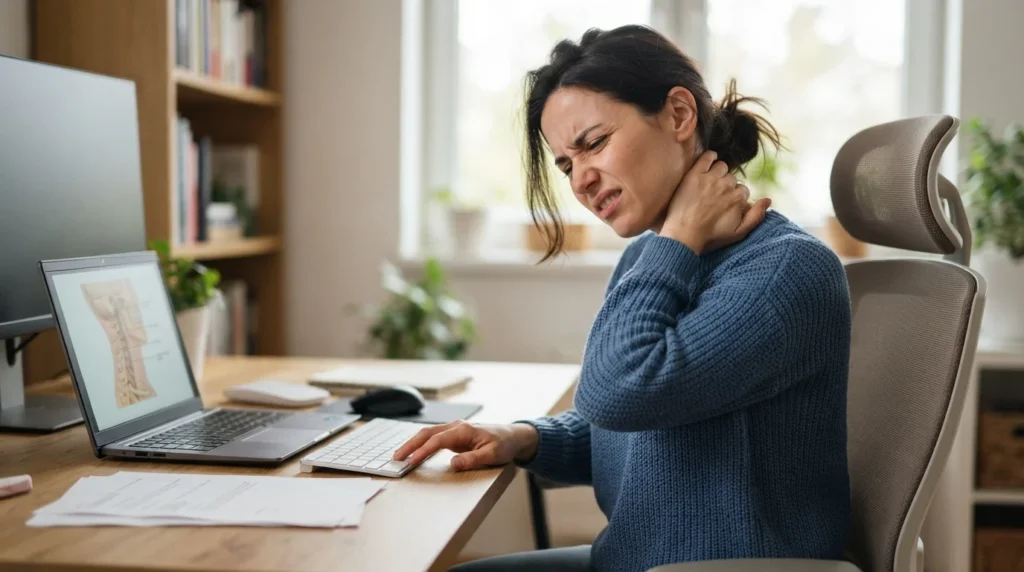

What Does “Cervicalgia” Mean?
Quick Definition
Cervicalgia is the medical term for pain located in the neck, specifically in the cervical region of the spine.
Medical Definition
In medicine, cervicalgia refers to pain affecting the cervical spine, which consists of the first seven vertebrae (C1–C7). The pain may involve muscles, ligaments, joints, discs, or nerves in the neck.
Literal Meaning
The word comes from:
- Cervical = relating to the neck
- -algia = pain
Together, cervicalgia literally means “neck pain.”
Common Causes of Cervicalgia
Many conditions can lead to cervicalgia. Some are temporary, while others may require medical treatment.
Muscle Strain
One of the most common causes.
It may result from:
- Poor posture
- Sleeping in an awkward position
- Heavy lifting
- Repetitive movements
Poor Posture
Looking down at phones or computers for long periods can strain the neck muscles, sometimes called “tech neck.”
Injury
Examples include:
- Whiplash after a car accident
- Sports injuries
- Falls
Arthritis
Age-related changes in the cervical spine can cause pain and stiffness.
Herniated Disc
A bulging or herniated cervical disc may press on nearby nerves, causing neck pain and pain that radiates into the shoulders or arms.
Pinched Nerve
Compression of a nerve in the cervical spine may lead to:
- Pain
- Numbness
- Tingling
- Weakness in the arm or hand
Other Possible Causes
Less common causes include:
- Spinal infections
- Tumors
- Inflammatory diseases
- Congenital spine disorders
Symptoms of Cervicalgia
Symptoms vary depending on the underlying cause.
Common symptoms include:
- Neck pain
- Neck stiffness
- Difficulty turning the head
- Muscle tightness
- Headaches
- Shoulder pain
- Upper back pain
Some people may also experience:
- Tingling in the arms
- Numbness
- Weakness
- Reduced range of motion
Seek prompt medical evaluation if neck pain follows significant trauma or is accompanied by severe weakness, loss of coordination, fever, unexplained weight loss, or problems with bowel or bladder control.
How Is Cervicalgia Diagnosed?
Healthcare providers typically begin with:
Medical History
They may ask about:
- When the pain started
- Recent injuries
- Work habits
- Daily activities
- Previous neck problems
Physical Examination
The doctor may evaluate:
- Neck movement
- Muscle strength
- Reflexes
- Sensation
- Tenderness
Imaging Tests
Depending on symptoms, tests may include:
- X-rays
- MRI
- CT scan
These tests help identify structural problems.
Additional Tests
In some cases:
- Blood tests
- Nerve conduction studies
- Electromyography (EMG)
may be recommended.
Treatment Options for Cervicalgia
Treatment depends on the cause and severity of symptoms.
Rest and Activity Modification
Short periods of rest combined with gentle movement often help mild cases.
Physical Therapy
A physical therapist may recommend:
- Stretching exercises
- Strengthening exercises
- Posture correction
- Manual therapy
Medications
Doctors may recommend:
- Acetaminophen
- Nonsteroidal anti-inflammatory drugs (NSAIDs), when appropriate
- Muscle relaxants in selected cases
Medication choices should be made with guidance from a healthcare professional.
Heat and Cold Therapy
- Ice packs may help reduce inflammation soon after an injury.
- Heat can help relax tight muscles in some situations.
Lifestyle Changes
Helpful habits include:
- Improving posture
- Adjusting workstation ergonomics
- Taking regular movement breaks
- Using supportive pillows
Surgery
Surgery is uncommon and is generally reserved for specific conditions, such as significant nerve compression or spinal instability that does not improve with appropriate conservative treatment.
How to Prevent Cervicalgia
You can reduce your risk by:
- Maintaining good posture
- Exercising regularly
- Strengthening neck and shoulder muscles
- Adjusting your computer screen to eye level
- Avoiding prolonged phone use with your head bent forward
- Sleeping with appropriate neck support
- Taking breaks during long periods of sitting
Real-Life Examples
Example 1
An office worker develops neck pain after working on a laptop for eight hours daily.
Cause: Poor posture.
Example 2
A driver experiences neck pain after a rear-end collision.
Cause: Whiplash injury.
Example 3
A student wakes up with a stiff neck after sleeping awkwardly.
Cause: Muscle strain.
Example 4
An older adult develops chronic neck pain due to arthritis.
Cause: Degenerative changes.
Example 5
A warehouse worker experiences neck pain after repeatedly lifting heavy boxes.
Cause: Muscle overuse.
Common Mistakes and Misunderstandings
Mistake 1: Thinking Cervicalgia Is a Disease
It isn’t.
Cervicalgia is a symptom or diagnosis describing neck pain, not a specific disease.
Mistake 2: Assuming All Neck Pain Is Serious
Many cases improve with conservative care, although persistent or severe symptoms should be evaluated.
Mistake 3: Ignoring Persistent Symptoms
Neck pain lasting several weeks or accompanied by neurological symptoms should be assessed by a healthcare professional.
Mistake 4: Confusing Cervicalgia with Cervical Cancer
“Cervical” can refer to either the neck or the cervix, depending on the context. Cervicalgia always refers to neck pain, not conditions affecting the cervix.
Related Medical Terms
| Term | Meaning | Difference |
|---|---|---|
| Neck Pain | Pain in the neck | Everyday term |
| Cervical Spine | Neck portion of the spine | Anatomical structure |
| Cervical Radiculopathy | Pinched nerve in the neck | Often causes arm symptoms |
| Whiplash | Neck injury from rapid movement | Common cause of cervicalgia |
| Torticollis | Twisted neck posture | Different condition |
| Herniated Cervical Disc | Bulging disc in the neck | Possible cause |
| Osteoarthritis | Joint degeneration | May affect the neck |
| Muscle Strain | Overstretched muscle | Common cause of neck pain |
Internal linking opportunities:
- Neck pain causes
- Cervical radiculopathy
- Whiplash injury
- Herniated disc
- Arthritis meaning
- Physical therapy
- Sciatica meaning
- Ergonomics explained
Is Cervicalgia Serious?
Not always.
Many cases are mild and improve with conservative treatment. However, cervicalgia can sometimes indicate a more serious underlying condition, especially if accompanied by:
- Severe trauma
- Progressive weakness
- Numbness that worsens
- Difficulty walking or maintaining balance
- Fever or unexplained weight loss
- Loss of bowel or bladder control
These symptoms require prompt medical evaluation.
Should You See a Doctor?
You should consider medical evaluation if:
- Neck pain lasts more than a few weeks.
- Pain is severe or getting worse.
- Pain follows a significant injury.
- You experience numbness, tingling, or weakness.
- Home care does not improve your symptoms.