
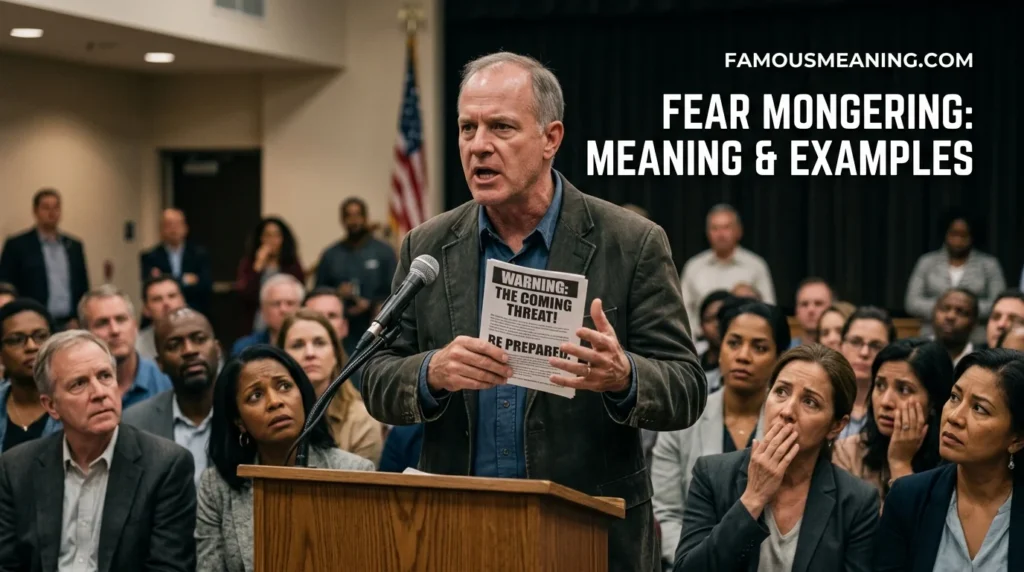

What Does “Fear Mongering” Mean?
Quick Definition
Fear mongering is the practice of intentionally creating or spreading fear to influence people’s thoughts, opinions, or actions.
Literal Meaning
The word mongering means promoting, spreading, or encouraging something. Therefore, fear mongering literally means spreading fear.
Most Common Meaning
Today, fear mongering usually refers to:
- Exaggerating dangers
- Using alarming language
- Making threats seem larger than they are
- Encouraging panic without sufficient evidence
- Influencing decisions through fear instead of facts
It is generally used in a negative sense because it suggests manipulation rather than balanced communication.
What Does Fear Mongering Mean in Different Contexts?
Politics
In politics, people may accuse candidates or parties of fear mongering if they use dramatic warnings or worst-case scenarios to persuade voters instead of presenting balanced evidence.
News and Media
Some critics use the term when they believe news coverage focuses heavily on frightening stories or sensational headlines that may create unnecessary anxiety.
However, it’s important to distinguish accurate reporting about genuine risks from fear mongering. Reporting verified facts about real dangers is not, by itself, fear mongering.
Advertising
Some advertisements rely on fear to encourage consumers to buy products.
Examples include:
- Home security systems emphasizing burglary risks.
- Insurance advertisements highlighting potential financial losses.
- Health products focusing on possible illnesses.
Using fear in advertising is not automatically fear mongering; it depends on whether the claims are truthful, proportionate, and supported by evidence.
Social Media
Fear mongering often spreads rapidly through:
- Viral posts
- Misleading headlines
- Rumors
- Unverified claims
- Edited videos
- Clickbait content
Because information can spread quickly online, it’s helpful to verify claims before sharing them.
Business
Businesses may be accused of fear mongering if they exaggerate competitors’ risks or overstate problems to make their own products seem like the only solution.
Origin and History of Fear Mongering
Where Did the Term Come From?
The word monger comes from Old English and originally referred to a merchant or trader.
Over time, English speakers began combining monger with other words, such as:
- Fishmonger
- Warmonger
- Scandalmonger
Eventually, fear monger came to describe someone who spreads fear, while fear mongering refers to the practice itself.
Modern Usage
Today, the term is widely used in discussions involving:
- Politics
- Journalism
- Advertising
- Public health
- Business
- Social media
- Public debates
How People Actually Use Fear Mongering
Most people use the phrase when they believe someone is exaggerating threats to influence others.
You’ll often hear statements like:
- “That’s just fear mongering.”
- “Stop spreading fear.”
- “The article uses fear mongering instead of evidence.”
- “Some advertisements rely on fear mongering.”
- “Always check the facts before believing frightening claims.”
The phrase usually expresses criticism rather than approval.
Real Examples of Fear Mongering in Conversations
Example 1
Person A: This post says everyone will lose their jobs next month.
Person B: It sounds like fear mongering unless there’s reliable evidence.
Meaning: The claim may be exaggerated or unsupported.
Example 2
Person A: That advertisement says disaster is guaranteed without their product.
Person B: It feels like fear mongering.
Meaning: The ad may be using excessive fear to sell something.
Example 3
Person A: Should I believe every alarming headline?
Person B: No, check trusted sources first.
Meaning: Verify information before accepting frightening claims.
Example 4
Person A: Why is everyone sharing that rumor?
Person B: Fear spreads quickly online.
Meaning: Unverified information can create unnecessary panic.
Example 5
Person A: The speaker only talked about worst-case scenarios.
Person B: Some people would call that fear mongering.
Meaning: The presentation focused heavily on alarming possibilities.
Example 6
Person A: Is every warning fear mongering?
Person B: No. Genuine, evidence-based warnings are important.
Meaning: Legitimate risk communication is different from manipulation.
Example 7
Person A: This article provides data and expert opinions.
Person B: That’s different from fear mongering because it’s supported by evidence.
Meaning: Facts and context matter.
Example 8
Person A: Why are people panicking?
Person B: False rumors spread rapidly on social media.
Meaning: Misinformation can amplify fear.
Example 9
Person A: The company says only its product can keep you safe.
Person B: Be cautious if the message relies mainly on fear rather than evidence.
Meaning: Evaluate marketing claims critically.
Example 10
Person A: How can I avoid fear mongering?
Person B: Compare multiple reliable sources before reaching conclusions.
Meaning: Critical thinking helps reduce the impact of misleading information.
Common Mistakes and Misunderstandings
Mistake 1: Every Warning Is Fear Mongering
Incorrect.
Warnings based on credible evidence and communicated responsibly are an important part of public safety.
Mistake 2: Fear Mongering Always Involves False Information
Not necessarily.
Sometimes real facts are presented in an exaggerated, misleading, or highly selective way that creates an inaccurate impression of risk.
Mistake 3: Only Politicians Use Fear Mongering
False.
The term can apply to advertising, media, business, online discussions, and many other situations.
Mistake 4: Fear Mongering Always Works
Not always.
Some audiences recognize exaggerated messaging and may become skeptical or lose trust in the source.
Similar Words and Related Terms
| Term | Meaning | Difference |
|---|---|---|
| Scaremongering | Deliberately spreading fear | Often used interchangeably, especially in British English |
| Propaganda | Information used to influence opinions | Broader than fear mongering |
| Sensationalism | Exaggerated presentation to attract attention | May or may not involve fear |
| Misinformation | False or inaccurate information shared without intent to deceive | Doesn’t always involve fear |
| Disinformation | False information spread intentionally | May include fear-based messaging |
| Panic | Sudden, intense fear | Emotional response rather than a tactic |
| Rumor | Unverified information | Can contribute to fear mongering |
| Manipulation | Influencing others unfairly | Broader concept |
| Alarmism | Excessive warnings about danger | Closely related but focuses on exaggerating threats |
| Risk Communication | Sharing information about genuine risks | Aims to inform accurately rather than manipulate |
Internal linking opportunities: propaganda meaning, misinformation meaning, sensationalism meaning, manipulation meaning, rumor meaning.
Is Fear Mongering Positive, Negative, or Neutral?
The phrase fear mongering is almost always negative.
It suggests that someone is using fear unfairly or irresponsibly to influence others.
Common Negative Associations
- Manipulation
- Exaggeration
- Panic
- Misleading communication
- Emotional persuasion
Neutral Perspective
Because the term itself is often an accusation, people may disagree about whether a particular message truly qualifies as fear mongering. Looking at the evidence, context, and reliability of the information can help make a more informed judgment.
Should You Use the Phrase “Fear Mongering”?
Use It If
- You have good reason to believe fear is being exaggerated or used manipulatively.
- You can explain why the communication is misleading or disproportionate.
- You’re discussing media literacy, communication, or persuasive techniques.
Avoid It If
- You’re dismissing genuine, evidence-based safety warnings.
- You haven’t verified the facts.
- The issue involves legitimate risks supported by reliable evidence.