
What Does “Mocktail” Mean?
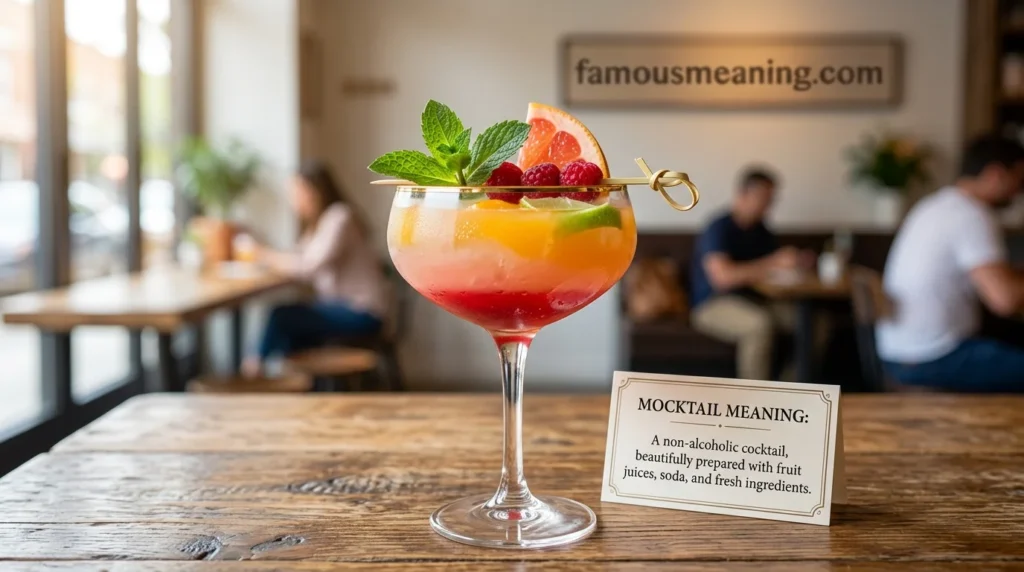
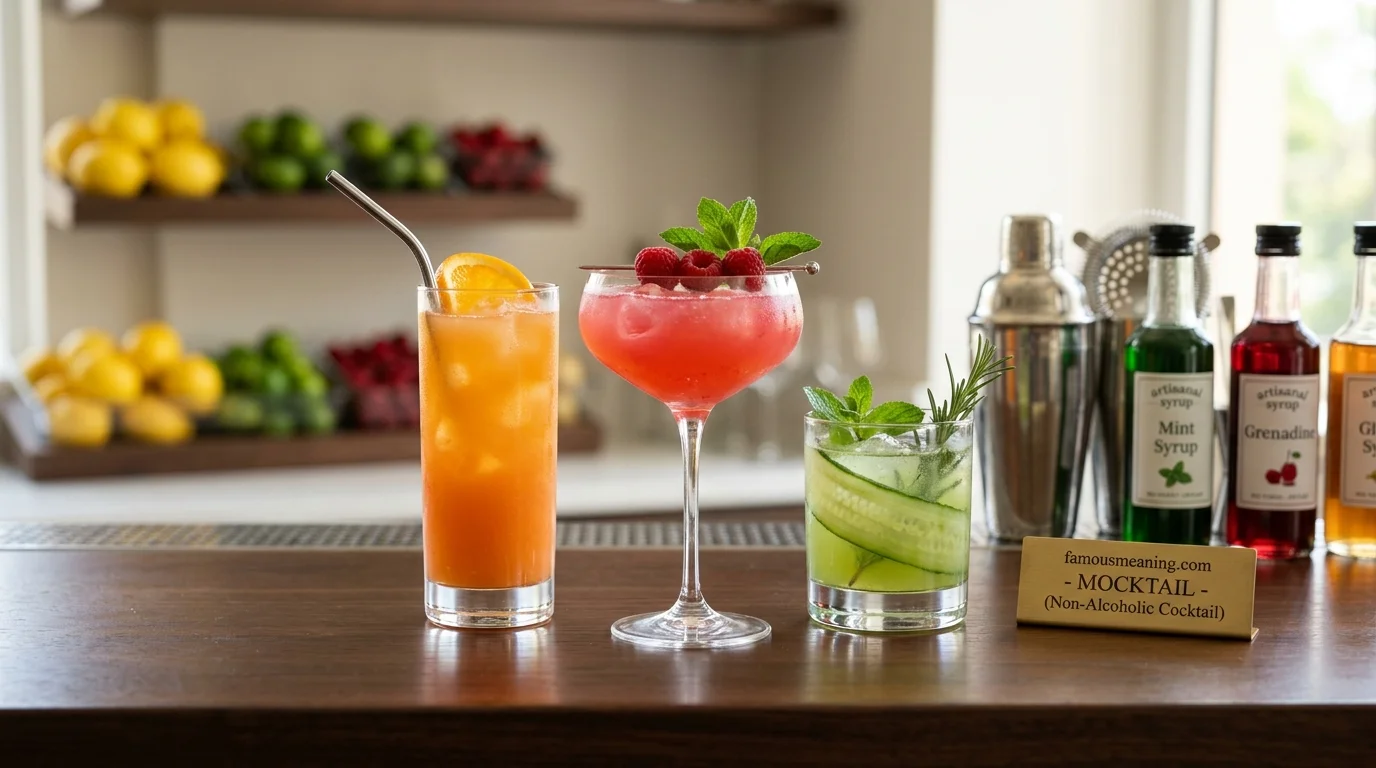
A mocktail is a non-alcoholic beverage designed to imitate the flavor, appearance, or experience of a traditional cocktail without including alcohol.
The word combines:
- Mock = imitation or substitute
- Cocktail = an alcoholic mixed drink
Together, mocktail literally means an imitation cocktail.
Quick Definition
Mocktail (noun): A mixed drink made without alcohol, often prepared using fruit juices, sparkling water, soda, herbs, syrups, and fresh garnishes.
Simple Meaning
In everyday English, a mocktail simply means:
- An alcohol-free cocktail
- A fancy non-alcoholic drink
- A refreshing mixed beverage
- A festive drink suitable for all ages
Many mocktails are colorful, creative, and served in the same types of glasses as cocktails.
What Does a Mocktail Usually Include?
Most mocktails contain a combination of:
- Fresh fruit juice
- Sparkling water
- Club soda
- Lemonade
- Lime juice
- Mint leaves
- Basil
- Ginger
- Coconut water
- Fruit syrups
- Ice
- Fresh fruit slices
Some recipes also use non-alcoholic spirits to recreate the taste of classic cocktails.
What Does “Mocktail” Mean in Different Contexts?
Although the basic meaning remains the same, mocktails are enjoyed in many different settings.
Restaurants and Cafés
Many restaurants now offer a dedicated mocktail menu.
Example:
“I’ll have the passion fruit mocktail instead of a cocktail.”
Meaning:
The customer wants a flavorful drink without alcohol.
Weddings and Celebrations
Mocktails are popular at:
- Weddings
- Birthday parties
- Baby showers
- Graduation celebrations
- Corporate events
They allow guests of all ages to enjoy festive drinks together.
Health and Wellness
People often choose mocktails because they:
- Avoid alcohol
- Want fewer calories than some cocktails
- Need to drive home safely
- Prefer healthier lifestyle choices
Many wellness-focused cafés now feature fresh-fruit mocktails as signature drinks.
Home Entertaining
Mocktails are easy to prepare at home using simple ingredients.
Example:
“We served homemade berry mocktails at our family barbecue.”
Meaning:
Guests enjoyed non-alcoholic mixed drinks during the event.
Origin and History of “Mocktail”
The word mocktail comes from combining “mock”, meaning imitation, with “cocktail.”
Although non-alcoholic mixed drinks have existed for generations, the term mocktail became widely used during the late 20th century as restaurants and bars expanded their alcohol-free beverage options.
The growing popularity of health-conscious lifestyles, designated driving campaigns, and inclusive social events helped mocktails become a mainstream menu item.
Today, mocktails are enjoyed by:
- Adults who don’t drink alcohol
- Pregnant women
- Teenagers
- Families
- Athletes
- Health-conscious consumers
- People observing religious or cultural practices that prohibit alcohol
Modern bartenders have also elevated mocktails by creating sophisticated recipes that rival traditional cocktails in flavor and presentation.
Different Types of Mocktails
One reason mocktails are so popular is the incredible variety available.
Fruit Mocktails
These are made primarily with fresh fruit juices.
Examples:
- Mango mocktail
- Strawberry mocktail
- Pineapple mocktail
- Watermelon mocktail
- Orange mocktail
They are naturally sweet and refreshing.
Citrus Mocktails
These drinks highlight citrus flavors.
Popular ingredients include:
- Lemon
- Lime
- Orange
- Grapefruit
They are often light, crisp, and perfect for warm weather.
Sparkling Mocktails
These include:
- Club soda
- Sparkling water
- Tonic water
- Ginger ale
The bubbles create a cocktail-like experience without alcohol.
Herbal Mocktails
Fresh herbs add aroma and complexity.
Common herbs include:
- Mint
- Basil
- Rosemary
- Lavender
- Thyme
These mocktails are especially popular in upscale restaurants.
Tropical Mocktails
Inspired by island flavors, tropical mocktails often contain:
- Coconut
- Pineapple
- Passion fruit
- Mango
- Guava
- Kiwi
They are favorites during summer and vacations.
Creamy Mocktails
These beverages use ingredients such as:
- Coconut milk
- Yogurt
- Ice cream
- Milk
Examples include non-alcoholic piña coladas and fruit smoothies served in cocktail glasses.
Common Ingredients Used in Mocktails
The beauty of mocktails lies in their flexibility.
Popular ingredients include:
Fruits
- Strawberries
- Blueberries
- Raspberries
- Lemons
- Limes
- Oranges
- Pineapple
- Mango
- Watermelon
- Kiwi
Liquids
- Sparkling water
- Soda water
- Ginger ale
- Lemonade
- Coconut water
- Fruit juice
- Tea
Sweeteners
- Honey
- Simple syrup
- Agave syrup
- Maple syrup
Herbs
- Mint
- Basil
- Rosemary
- Lavender
Garnishes
- Citrus slices
- Mint sprigs
- Cherries
- Berries
- Edible flowers
These garnishes make mocktails look just as elegant as cocktails.
How People Actually Use the Word “Mocktail”
The word mocktail is commonly used when ordering drinks, discussing recipes, or planning events.
You’ll often hear people say:
- “I’d like a mocktail instead.”
- “Do you have any mocktails?”
- “This restaurant makes amazing mocktails.”
- “Let’s prepare fruit mocktails for the party.”
- “I’m not drinking tonight, so I’ll order a mocktail.”
Unlike many food-related terms, mocktail is easy to understand because it directly communicates that the drink resembles a cocktail without containing alcohol.
Real Examples of “Mocktail” in Sentences
Example 1
Sentence:
“I ordered a mango mocktail with fresh mint.”
Meaning:
The person chose a non-alcoholic fruit drink.
Example 2
Sentence:
“The wedding served colorful mocktails for guests who don’t drink alcohol.”
Meaning:
Alcohol-free beverages were available for everyone.
Example 3
Sentence:
“Our café recently introduced five new mocktails.”
Meaning:
The café expanded its non-alcoholic drink menu.
Example 4
Sentence:
“She prepared homemade strawberry mocktails for the birthday party.”
Meaning:
She made festive alcohol-free drinks.
Example 5
Sentence:
“My favorite summer drink is a watermelon mocktail.”
Meaning:
The speaker enjoys a refreshing non-alcoholic beverage.
Example 6
Sentence:
“The bartender created a beautiful mocktail using pineapple juice and coconut water.”
Meaning:
The drink looked like a cocktail but contained no alcohol.
Example 7
Sentence:
“We served sparkling mocktails at our office celebration.”
Meaning:
Employees enjoyed festive alcohol-free drinks.
Example 8
Sentence:
“The children loved the colorful fruit mocktails.”
Meaning:
The drinks were suitable for kids because they contained no alcohol.
Example 9
Sentence:
“I always choose a mocktail when I’m the designated driver.”
Meaning:
The speaker avoids alcohol while still enjoying a special beverage.
Example 10
Sentence:
“Her homemade mocktails became the highlight of the party.”
Meaning:
Guests especially enjoyed the creative alcohol-free drinks.
Why Mocktails Have Become So Popular
Mocktails have grown in popularity because they offer the experience of a beautifully crafted drink without alcohol. They’re suitable for celebrations, family gatherings, business events, and everyday dining, making them an inclusive choice for people with different preferences and lifestyles.
Many restaurants and cafés now treat mocktails as premium beverages rather than simple juice mixtures. Creative combinations of fresh fruit, herbs, sparkling ingredients, and elegant garnishes allow mocktails to be just as exciting and flavorful as traditional cocktails.
Mocktail vs. Cocktail: What’s the Difference?
One of the biggest reasons people search for the mocktail meaning is to understand how it differs from a cocktail. While the two drinks may look similar, the key difference is the presence—or absence—of alcohol.
| Feature | Mocktail | Cocktail |
|---|---|---|
| Alcohol | ❌ No | ✅ Yes |
| Suitable for Children | ✅ Yes (depending on ingredients) | ❌ No |
| Suitable for Pregnant Women | ✅ Usually (if ingredients are appropriate) | ❌ No |
| Main Ingredients | Juice, soda, sparkling water, herbs, syrups | Alcohol plus mixers |
| Taste | Fruity, refreshing, herbal, or sparkling | Can range from sweet to strong |
| Common Occasions | Family events, cafés, parties, restaurants | Bars, parties, celebrations |
Key Difference
A mocktail is designed to deliver the fun, flavor, and presentation of a cocktail without alcohol. This makes it a popular choice for people who want a festive drink while avoiding alcoholic beverages.
Popular Types of Mocktails
Mocktails come in countless varieties. Some of the most popular include:
- Virgin Mojito – Lime, mint, sparkling water, and sugar.
- Virgin Piña Colada – Pineapple juice, coconut cream, and ice.
- Shirley Temple – Ginger ale or lemon-lime soda with grenadine.
- Fruit Punch Mocktail – Mixed fruit juices with sparkling water.
- Berry Sparkler – Fresh berries, soda water, and mint.
- Cucumber Mint Cooler – Cucumber, mint, lemon, and sparkling water.
- Mango Fizz – Mango juice with club soda.
- Watermelon Cooler – Fresh watermelon, lime juice, and mint.
- Passion Fruit Spritzer – Passion fruit puree with sparkling water.
- Sunrise Mocktail – Orange juice layered with grenadine.
These drinks are popular because they are colorful, refreshing, and suitable for nearly every occasion.
Is a Mocktail Healthy?
A mocktail can be a healthier alternative to an alcoholic drink, but its nutritional value depends on the ingredients used.
A Mocktail May Be Healthier If It Contains:
- Fresh fruit juice
- Sparkling water
- Fresh herbs
- Citrus fruits
- Little or no added sugar
It May Be Less Healthy If It Contains:
- Large amounts of sugar syrup
- Sweetened sodas
- Artificial flavorings
- Heavy cream or excessive sweeteners
If you’re making mocktails at home, using fresh ingredients and limiting added sugar can make them a more balanced beverage choice.
Common Mistakes and Misunderstandings About Mocktails
Although mocktails are widely available today, several misconceptions still exist.
Mistake 1: Thinking Mocktails Are Just Juice
While some mocktails contain fruit juice, they’re usually much more sophisticated.
Many recipes include:
- Herbs
- Citrus
- Sparkling water
- Specialty syrups
- Fresh garnishes
- Non-alcoholic spirits
The goal is to create a drink that feels special rather than simply serving juice in a fancy glass.
Mistake 2: Assuming Mocktails Are Only for Non-Drinkers
Many people who enjoy alcoholic beverages also order mocktails.
Common reasons include:
- Driving home safely
- Taking a break from alcohol
- Staying hydrated
- Participating in health challenges
- Enjoying a flavorful drink without alcohol
Mocktails appeal to a broad audience, not just people who avoid alcohol permanently.
Mistake 3: Believing Every Mocktail Is Healthy
Not all mocktails are low in calories or sugar.
Some restaurant mocktails contain:
- Sweet syrups
- Flavored sodas
- Ice cream
- Added sugar
Checking the ingredients can help you choose a drink that fits your preferences and dietary goals.
Mistake 4: Thinking Mocktails Taste Boring
Modern mocktails are often crafted with the same creativity as cocktails.
Professional bartenders use:
- Fresh herbs
- Exotic fruits
- Bitters alternatives
- House-made syrups
- Sparkling mixers
- Decorative garnishes
The result is a flavorful and visually appealing drink.
Synonyms and Related Drink Terms
Although mocktail is the most common word, you’ll also come across these related terms.
| Term | Meaning | Difference |
|---|---|---|
| Mocktail | Alcohol-free cocktail | Standard term |
| Virgin Drink | Cocktail without alcohol | Often refers to classic cocktails made alcohol-free |
| Non-Alcoholic Cocktail | Alcohol-free mixed drink | More descriptive |
| Zero-Proof Drink | Contains no alcohol | Modern hospitality term |
| Spirit-Free Drink | Made without distilled spirits | Common in upscale bars |
| Alcohol-Free Beverage | General category | Includes more than mocktails |
| Soft Drink | Carbonated beverage | Not necessarily mixed |
| Fruit Cooler | Fruit-based refreshing drink | Usually simpler than a mocktail |
| Spritzer | Sparkling beverage | May or may not contain alcohol |
| Refresher | Light fruit-based drink | Often served cold |
Internal Linking Opportunities
If you’re creating a food, beverage, or vocabulary website, these related topics pair naturally with Mocktail Meaning:
- Cocktail Meaning
- Virgin Mojito Recipe
- Shirley Temple Drink
- Spritzer Meaning
- Smoothie vs. Milkshake
- Beverage Meaning
- Mixology Meaning
- Bar Menu Terms
- Brunch Drinks
- Summer Drinks
Linking these topics can improve user experience and strengthen topical authority.
Should You Order a Mocktail?
Mocktails are a great option if you want a flavorful drink without alcohol.
Choose a Mocktail If You:
- Don’t drink alcohol.
- Are the designated driver.
- Prefer alcohol-free options.
- Want a refreshing beverage.
- Enjoy creative drinks with fresh ingredients.
- Are attending a family-friendly event.
You Might Prefer a Different Drink If You:
- Want a simple beverage like water or juice.
- Need to avoid sugary drinks.
- Prefer hot beverages such as tea or coffee.
Ultimately, the best choice depends on your taste preferences and the occasion.
Key Takeaways
Here are the main points to remember about the mocktail meaning:
- A mocktail is a non-alcoholic mixed drink designed to resemble a cocktail.
- The word combines “mock” and “cocktail.”
- Mocktails are made with ingredients like fruit juice, sparkling water, herbs, syrups, and fresh fruit.
- They’re suitable for a wide range of occasions, including family gatherings, weddings, and restaurants.
- Mocktails can be both refreshing and visually appealing, offering a festive alternative to alcoholic drinks.
- Their nutritional value depends on the ingredients used, so recipes can range from light and healthy to rich and sweet.