
What Does “Nicotine” Mean?
Quick Definition
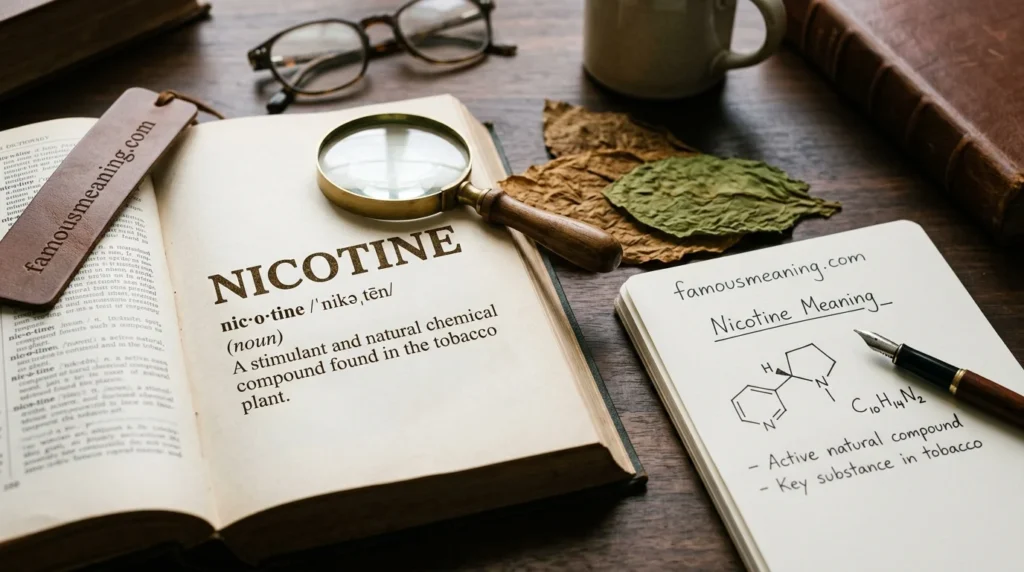
Nicotine is a naturally occurring stimulant chemical (an alkaloid) primarily found in tobacco plants. It affects the central nervous system by interacting with receptors in the brain, leading to increased alertness, temporary pleasure, and, with repeated use, dependence.
Literal Meaning
The word nicotine refers specifically to the chemical compound itself—not to cigarettes, vaping, or smoking. It’s simply the name of the substance.
Most Common Meaning
Today, when people mention nicotine, they’re usually referring to:
- The addictive substance in tobacco products
- The active ingredient in many vaping liquids
- Nicotine replacement products such as gum, lozenges, and patches
Is Nicotine a Slang Term?
No. Nicotine is a scientific and medical term. However, it frequently appears in everyday conversations, online discussions, memes, and social media.
What Does Nicotine Mean in Different Contexts?
Health and Medicine
In healthcare, nicotine refers to the chemical that causes dependence on tobacco products. It is also used in nicotine replacement therapies to help people quit smoking.
Everyday Conversations
People often use “nicotine” as shorthand for smoking or vaping.
Examples:
- “I’m trying to quit nicotine.”
- “That vape contains nicotine.”
- “I haven’t had nicotine all day.”
Social Media
On platforms like TikTok, Instagram, Reddit, and X, nicotine is commonly discussed in relation to:
- Vaping
- Smoking
- Quitting
- Addiction
- Memes about cravings
- Lifestyle discussions
Gaming Communities
Players may jokingly mention taking a “nicotine break” between matches, referring to stepping away to smoke or vape.
Origin and History of Nicotine
Where Does the Word Come From?
The word nicotine comes from the tobacco plant’s scientific history. The name is derived from Jean Nicot, a 16th-century French diplomat who helped introduce tobacco to France.
Where Is Nicotine Found?
Although tobacco contains the highest concentrations, nicotine naturally occurs in very small amounts in several plants from the nightshade family, including:
- Tomatoes
- Eggplants
- Potatoes
- Peppers
The amounts in these vegetables are extremely small and are not comparable to tobacco products.
Modern Use
Today, nicotine is present in products such as:
- Cigarettes
- Cigars
- Smokeless tobacco
- E-cigarettes and vape liquids
- Nicotine gum
- Nicotine patches
- Nicotine lozenges
- Nicotine pouches
How Nicotine Works
What Happens After Nicotine Enters the Body?
After nicotine is inhaled, absorbed through the mouth, or absorbed through the skin, it quickly reaches the brain.
There, it stimulates receptors that release chemicals including dopamine, which contributes to feelings of reward and satisfaction.
Short-Term Effects
People may experience:
- Increased alertness
- Temporary relaxation
- Improved concentration
- Faster heart rate
- Elevated blood pressure
These effects are temporary and vary between individuals.
Why Is Nicotine Addictive?
Repeated nicotine exposure changes the brain’s reward pathways. Over time, the brain begins to expect nicotine regularly, making it difficult for many people to stop using it.
Common Sources of Nicotine
Tobacco Cigarettes
The traditional and most widely recognized source.
Cigars
Contain nicotine, even if the smoke isn’t inhaled deeply.
E-Cigarettes and Vapes
Many vaping products contain nicotine in varying strengths, although some are nicotine-free.
Nicotine Pouches
Tobacco-free oral products that deliver nicotine.
Nicotine Replacement Therapy
Designed to help adults quit smoking by gradually reducing nicotine dependence.
Examples include:
- Gum
- Lozenges
- Patches
- Inhalers
- Nasal sprays
How People Actually Use the Word “Nicotine”
Most people use the word in everyday conversations rather than its scientific context.
You’ll often hear phrases like:
- “I’m addicted to nicotine.”
- “This vape has too much nicotine.”
- “I’m trying to quit nicotine.”
- “I switched to nicotine gum.”
- “I need a nicotine break.”
The word usually refers to nicotine-containing products rather than the chemical itself.
Real-Life Conversation Examples
Example 1
Person A: Do you smoke?
Person B: No, but I vape nicotine.
Meaning: The vape contains nicotine.
Example 2
Person A: Why are you outside?
Person B: Taking a nicotine break.
Meaning: They’re stepping outside to smoke or vape.
Example 3
Person A: Are those nicotine pouches?
Person B: Yes, I’m trying to quit cigarettes.
Meaning: They’re using an alternative nicotine product.
Example 4
Person A: Does this vape have nicotine?
Person B: It’s nicotine-free.
Meaning: The vape contains no nicotine.
Example 5
Person A: I’ve gone three days without nicotine.
Person B: Nice work!
Meaning: They’re avoiding nicotine products.
Example 6
Person A: Why is everyone talking about nicotine online?
Person B: Vaping trends are everywhere.
Meaning: Nicotine is a common topic on social media.
Example 7
Person A: That cigarette has nicotine, right?
Person B: Yes, it does.
Meaning: Cigarettes naturally contain nicotine.
Example 8
Person A: Why are you chewing that gum?
Person B: It’s nicotine gum.
Meaning: It’s intended to help manage nicotine cravings.
Example 9
Person A: Is vaping safer than smoking?
Person B: They both can involve nicotine, but they’re different products.
Meaning: Nicotine can be present in both.
Example 10
Person A: What’s the hardest part about quitting?
Person B: Missing nicotine.
Meaning: They’re referring to cravings for nicotine.
Common Misunderstandings About Nicotine
Myth: Nicotine Causes Cancer
Nicotine itself is not generally considered the primary cause of smoking-related cancers. The greatest cancer risks from smoking come from the many harmful chemicals produced when tobacco is burned. However, nicotine is highly addictive and can make quitting tobacco more difficult.
Myth: Every Vape Contains Nicotine
False.
Some vaping liquids contain no nicotine at all.
Myth: Vegetables Contain Dangerous Levels of Nicotine
False.
Foods like tomatoes and potatoes contain only tiny trace amounts that are not comparable to tobacco products.
Myth: Quitting Nicotine Is Easy
Many people find quitting challenging because nicotine can lead to dependence and withdrawal symptoms.
Similar Terms
| Term | Meaning | Difference |
|---|---|---|
| Tobacco | Plant containing nicotine | Plant, not the chemical |
| Smoking | Burning tobacco | Method of use |
| Vaping | Using an electronic vapor device | May or may not contain nicotine |
| Nicotine Gum | Nicotine replacement product | Helps some adults quit smoking |
| Nicotine Patch | Skin patch delivering nicotine | Gradual nicotine delivery |
| Nicotine Pouch | Oral nicotine product | Tobacco-free but contains nicotine |
| Addiction | Dependence on a substance | Broader concept |
| Withdrawal | Symptoms after stopping | Result of dependence |
| Craving | Strong desire to use nicotine | Common during quitting |
| Tobacco-Free | No tobacco | May still contain nicotine |
Is Nicotine Good or Bad?
The answer depends on the context.
Potential Benefits
In some medically supervised situations, nicotine replacement products can help adults quit smoking.
Risks
Nicotine may:
- Lead to dependence
- Increase heart rate
- Raise blood pressure
- Cause withdrawal symptoms when use stops
For children, teenagers, and people who do not already use tobacco, avoiding nicotine is generally recommended because of its addictive potential.
Should You Use Nicotine?
Consider Avoiding Nicotine If
- You don’t currently use tobacco or nicotine products.
- You’re looking to avoid developing nicotine dependence.
- You’re pregnant or advised by a healthcare professional to avoid nicotine.
If You’re Trying to Quit Smoking
Many adults work with healthcare professionals to choose evidence-based quitting methods, which may include counseling, medications, or nicotine replacement therapy when appropriate.