

What Is the Origin of the Word Oiran?
The Japanese word oiran is commonly written as 花魁. Its pronunciation is approximately “oh-ee-rahn.”
The term is often explained as deriving from a phrase meaning “the flower of the courtesans” or referring to a woman who stood out among her peers. Oiran occupied the highest levels of the courtesan hierarchy and were associated with luxury, status, and refined cultural practices.
Their world developed in Japan’s licensed pleasure quarters, particularly during the Edo period. One of the best-known districts was Yoshiwara in Edo, now Tokyo.
What Did Oiran Do in Japanese Society?
Oiran were more than figures admired for their appearance. Their work involved several forms of entertainment and social interaction.
Depending on their rank and establishment, their responsibilities could include:
Conversation and companionship: Entertaining clients through conversation and social gatherings.
Traditional arts: Demonstrating knowledge of music, poetry, dance, and other cultural practices.
Fashion and presentation: Wearing elaborate kimono and carefully styled hairstyles.
Social etiquette: Following formal manners and customs when meeting clients.
Cultural influence: Setting fashion trends that other people in Edo society admired and sometimes copied.
Oiran were part of a highly structured system. Their status depended on rank, reputation, skill, and the establishment where they worked. However, their luxurious public image should not hide the difficult realities of life in the pleasure quarters, where women’s choices and freedom were often restricted.
Oiran Clothing, Makeup, and Hairstyles
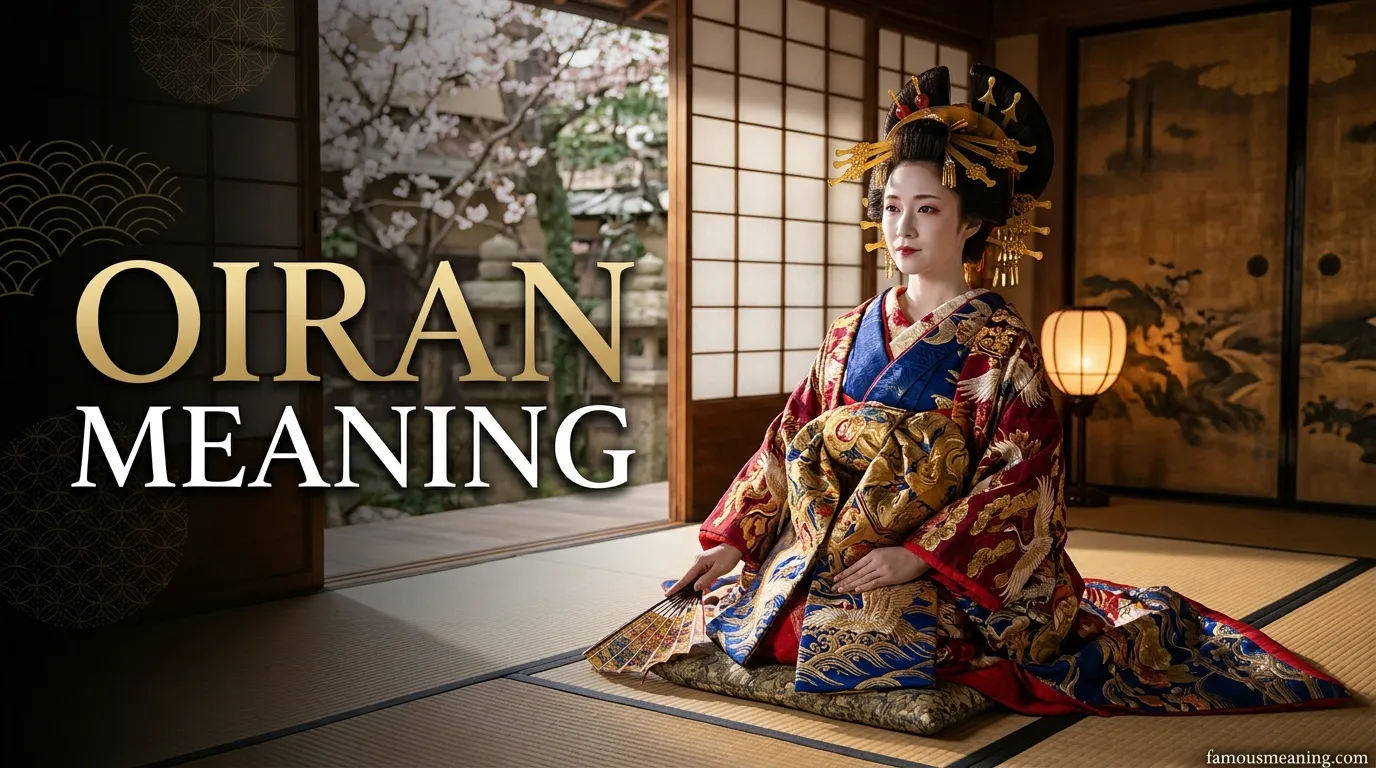
One of the most recognizable features of an oiran was her elaborate appearance. Their clothing and hairstyles communicated status and helped distinguish them from other women in the pleasure quarters.
1. Elaborate Kimono
Oiran wore luxurious kimono featuring detailed patterns, rich fabrics, and seasonal designs. Their outfits were often more decorative than everyday clothing.
2. Front-Tied Obi
A distinctive feature was the obi, or kimono sash, tied at the front rather than the back. This style helped distinguish courtesans from many other women in Japanese society.
3. Decorative Hairstyles
Oiran hairstyles were often large and elaborate, decorated with ornamental hairpins called kanzashi. These accessories could include combs, flowers, and other decorative pieces.
4. Traditional Makeup
White face makeup, darkened eyebrows, and red accents were among the styles associated with historical courtesans. The exact appearance varied across periods and ranks.
5. Tall Wooden Footwear
Some oiran wore tall wooden sandals known as sanmaiba geta. These had three raised supports and made walking a carefully practiced performance.
These fashion details are frequently represented in Japanese ukiyo-e woodblock prints.
Oiran vs. Geisha: What Is the Difference?
Oiran and geisha are often confused because both are connected with traditional Japanese entertainment and may appear in elaborate kimono. However, they had different professions.
Feature | Oiran | Geisha |
|---|---|---|
Main role | High-ranking courtesan | Professional entertainer |
Historical setting | Licensed pleasure quarters | Entertainment venues and social gatherings |
Work | Companionship and intimate services, alongside entertainment | Music, dance, singing, and conversation |
Clothing | Often extremely elaborate | Varied according to occasion and status |
Social identity | Courtesan | Artist and entertainer |
The main difference: An oiran was a courtesan, while a geisha was a trained entertainer. Geisha were not simply another name for courtesans. In the historical Yoshiwara district, geisha were prohibited from engaging in prostitution as part of their professional role.
What Was Yoshiwara, and Why Was It Important to Oiran?
Yoshiwara was a famous licensed pleasure district in Edo, the city now known as Tokyo. It became an important center of nightlife, fashion, and entertainment during the Edo period.
The original district was established in the early seventeenth century. After a major fire in 1657, it was relocated to the Asakusa area.
Oiran became some of the district’s most recognizable figures. Their clothing, hairstyles, manners, and public appearances influenced Japanese popular culture. Their images appeared in ukiyo-e prints and kabuki performances, helping preserve their place in historical art.
Today, the district’s history is remembered through cultural explanations, exhibitions, historical artwork, and festival reenactments.
What Is an Oiran Dochu?
An Oiran Dochu is a formal procession associated with an oiran walking through the pleasure district, traditionally accompanied by attendants.
The procession was an important public display. The oiran’s elaborate clothing, distinctive walking style, and attendants made the event visually impressive.
Today, Oiran Dochu processions are sometimes recreated at Japanese cultural festivals. These events allow visitors to see traditional clothing and historical customs in a modern presentation.
Is Oiran a Common Word in Modern Japanese?
No. Oiran is primarily a historical and cultural term rather than an everyday word used in ordinary Japanese conversation.
You may encounter it in:
Japanese history books and documentaries.
Museums and exhibitions about the Edo period.
Traditional Japanese art and ukiyo-e prints.
Anime, manga, and historical dramas.
Video games featuring historical Japanese settings.
Fashion, photography, and cultural festivals.
In modern entertainment, the word may be used to describe a character inspired by the appearance or lifestyle of historical oiran. That does not necessarily mean the character accurately represents the historical profession.
Is Oiran a Slang Word or a Name?
Oiran is not generally considered modern internet slang. It is a historical Japanese term with a specific cultural meaning.
It can also appear as a character name, username, or artistic label, but those uses depend on the context. If someone uses the word in a message, they may be referring to Japanese history, traditional fashion, or a fictional character.
What Does the Japanese Word Oiran Literally Mean?
The word is written as 花魁 in Japanese.
花 (hana): Flower.
魁 (saki-gake): Pioneer, leader, or someone who comes before others.
These characters can suggest the idea of a leading or outstanding flower, but this is not a complete explanation of the word’s historical origin.
The exact etymology is uncertain. One commonly discussed theory connects oiran to the phrase oira no tokoro no nēsan, approximately meaning “the older sister from our place.” This explanation relates to how attendants addressed senior courtesans.
10 Interesting Facts About Oiran
Oiran belonged to the highest ranks: They were among the most prestigious courtesans in Edo’s Yoshiwara district.
They were cultural figures: Their influence extended beyond entertainment into fashion and the arts.
They wore elaborate kimono: Their clothing often featured rich fabrics and detailed designs.
Their obi was tied in front: This was a recognizable feature of their traditional appearance.
They wore decorative hair ornaments: Kanzashi helped create their elaborate hairstyles.
They had attendants: Younger attendants, including girls known as kamuro, could accompany them.
They influenced fashion: Women outside the pleasure quarters sometimes copied their hairstyles and clothing.
They appeared in Japanese artwork: Ukiyo-e prints frequently depicted oiran and their surroundings.
They were different from geisha: Their professional roles were not interchangeable.
Their legacy continues today: Historical festivals and reenactments keep aspects of oiran culture visible.
Common Misunderstandings About Oiran
Misunderstanding | Correct explanation |
|---|---|
Oiran and geisha mean the same thing. | They had different professional roles. |
Oiran were simply ordinary Japanese women in kimono. | They were high-ranking courtesans in historical pleasure quarters. |
Every woman wearing white makeup was an oiran. | Makeup alone does not identify someone as an oiran. |
Oiran were only famous for beauty. | They were also associated with entertainment skills, etiquette, and fashion. |
Oiran is modern Japanese slang. | It is primarily a historical and cultural term. |