

What Does QA Mean?
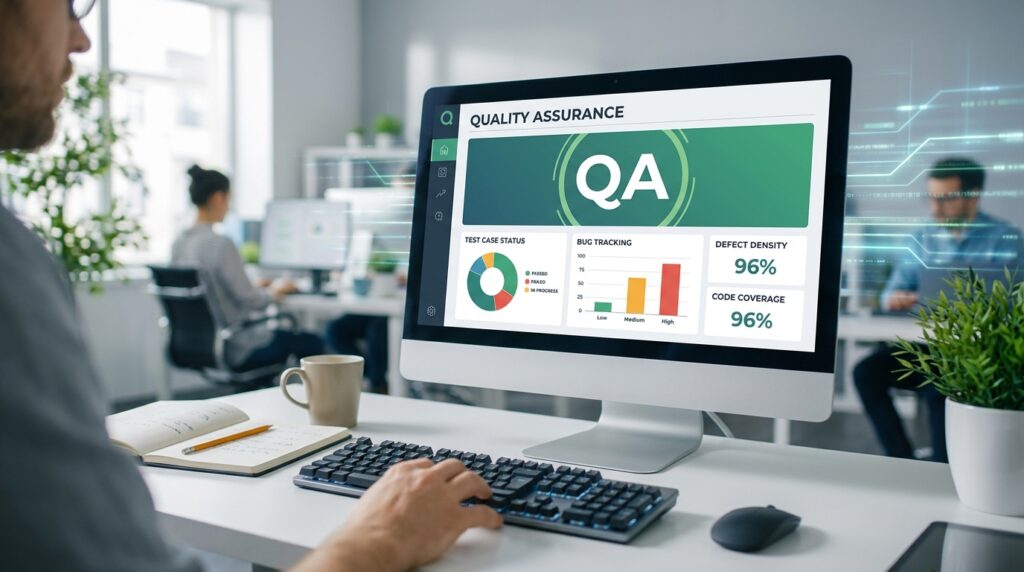
QA most commonly means “Quality Assurance.”
Quality assurance is a systematic approach to making sure a product, service, process, or system meets established requirements and quality standards.
For example:
“The QA team found a problem before the app was released.”
Here, QA means Quality Assurance, and the QA team is responsible for checking the software for problems and verifying that it works as expected.
Another common interpretation is Q&A, which means Questions and Answers.
For example:
“The speaker will have a QA session after the presentation.”
In this situation, QA may be an informal shortening of Q&A.
QA Meaning in Simple English
In simple terms:
QA = Quality Assurance when talking about testing and quality.
Q&A = Questions and Answers when talking about discussions, interviews, or question sessions.
The correct meaning depends on the context.
QA Meaning in Software
In the technology industry, QA almost always means Quality Assurance.
Software QA involves checking software to identify problems and determine whether the product behaves according to its requirements.
A QA professional may test:
- Websites
- Mobile apps
- Desktop software
- Games
- APIs
- Online stores
- Payment systems
- Business applications
For example:
“The developer finished the feature, and now it is with QA.”
This means the feature has moved to the quality-assurance team for testing.
What Does a QA Tester Do?
A QA tester checks software for defects, unexpected behavior, and other problems.
A tester may:
- Read the requirements.
- Create test cases.
- Test different features.
- Try unusual or unexpected inputs.
- Record bugs.
- Verify fixes.
- Perform regression testing.
- Confirm that important features still work after changes.
The exact responsibilities vary between companies.
QA Example in a Workplace
Imagine a shopping website has a checkout button.
A QA tester might check whether:
- The button works.
- The correct product appears in the order.
- The total price is correct.
- Discounts are applied correctly.
- Payment processing works.
- Error messages appear when information is missing.
- The checkout works on different devices.
The goal is not simply to click buttons. QA involves systematically checking whether software meets its expected requirements.
QA vs. Testing
Although people sometimes use QA and software testing as if they mean exactly the same thing, they are not necessarily identical.
Testing is the activity of examining software to find problems or verify behavior.
Quality assurance is broader and can include processes designed to improve and maintain quality throughout development.
For example, QA may involve:
- Testing procedures
- Quality standards
- Development processes
- Documentation
- Reviews
- Defect tracking
- Process improvement
So, a person who performs software testing may work in QA, but QA can encompass more than testing alone.
QA Meaning in Texting and Chat
In texting, QA does not have one universal slang meaning.
If you see QA in a casual message, the surrounding words are important.
For example:
“We have a QA at the end of the event.”
The person may be referring to a Q&A, or question-and-answer session.
However, if someone says:
“Send it to QA before we publish it.”
they probably mean Quality Assurance.
Unlike abbreviations such as LOL or IDK, QA is not primarily a universal internet-slang abbreviation.
Does QA Mean Questions and Answers?
Sometimes.
Q&A is the standard abbreviation for Questions and Answers, but people may casually write QA when referring to a question-and-answer session.
For example:
“There will be a QA after the webinar.”
The intended meaning is likely:
“There will be a question-and-answer session after the webinar.”
When writing formally, Q&A is usually clearer.
QA Meaning on Social Media
On social media, QA can have different meanings depending on the post.
For example, a creator might write:
“QA starts at 8 PM.”
This could mean a Q&A session.
A business might post:
“Our QA team has checked the new feature.”
Here, QA means Quality Assurance.
A technology account might use QA in discussions about:
- Software testing
- Bugs
- Development
- Automation
- Product releases
- Engineering
Therefore, there is no single social-media definition of QA.
QA on Instagram
On Instagram, QA may appear in posts, stories, or captions referring to a question-and-answer session.
For example:
“Drop your questions for tonight’s QA.”
The creator probably means Q&A.
However, a professional or technology account could use QA to mean Quality Assurance.
QA on TikTok
On TikTok, QA may occasionally appear when creators discuss:
- Q&A videos
- Interviews
- Software
- Product testing
- Work-related topics
Context determines the meaning.
QA on Discord
Discord users may use QA in gaming or technology communities to mean Quality Assurance, especially when discussing game testing or software development.
For example:
“The update is going through QA.”
This means the update is being tested for quality and potential problems.
In a community discussion, QA could also refer to a question-and-answer session.
QA Meaning in Business
In business, QA usually means Quality Assurance.
Companies may have QA teams responsible for checking whether products and services meet defined requirements.
QA can be used in industries such as:
- Software
- Manufacturing
- Healthcare
- Customer service
- Food production
- Telecommunications
- Finance
- E-commerce
For example:
“The QA department reviewed the production process.”
Here, QA refers to quality assurance.
QA in Customer Service
Some customer-service companies use QA teams to evaluate interactions between employees and customers.
A QA reviewer might examine whether a representative:
- Followed company procedures
- Greeted the customer appropriately
- Provided accurate information
- Used the correct workflow
- Documented the interaction correctly
- Resolved the customer’s issue
This type of QA is often used to maintain service standards and identify opportunities for improvement.
QA Meaning in Manufacturing
In manufacturing, quality assurance helps ensure that products are produced according to established requirements.
QA activities can involve:
- Quality standards
- Production procedures
- Inspections
- Documentation
- Process monitoring
- Defect prevention
- Audits
For example:
“The factory uses QA checks before products are shipped.”
The purpose is to identify quality issues before products reach customers.
QA Meaning in Education
In education, QA can have more than one meaning.
It may refer to Questions and Answers, particularly in a classroom, webinar, lecture, or study session.
For example:
“The professor included a QA session after the lecture.”
In an educational organization, QA can also mean Quality Assurance, referring to processes used to maintain educational standards.
Therefore, the subject and surrounding language are important.
QA Meaning in Interviews
If someone says:
“The interview will include a QA session.”
they may mean questions and answers.
However, the phrase Q&A session is much more common and clearer.
For example:
“After the presentation, we will have a Q&A.”
This clearly tells the audience that they can ask questions.
QA vs. Q&A
| Term | Common Meaning | Typical Context |
|---|---|---|
| QA | Quality Assurance | Software, business, manufacturing |
| Q&A | Questions and Answers | Interviews, events, education |
| QA | Informal Q&A shorthand | Online discussions |
If you are writing professionally, using Q&A for “Questions and Answers” avoids confusion with Quality Assurance.
QA Meaning in Different Contexts
The following examples show how the meaning can change.
In Software
“The app is ready for QA.”
Meaning: Quality Assurance testing.
In an Online Event
“We will have a QA after the presentation.”
Meaning: Probably a question-and-answer session.
In Manufacturing
“QA approved the batch.”
Meaning: Quality Assurance.
In Education
“The class will end with a QA.”
Meaning: Probably a question-and-answer session.
In Customer Service
“The QA score was 92%.”
Meaning: A quality-assurance evaluation or score.
QA Meaning in Job Titles
QA often appears in job titles.
Common examples include:
- QA Tester
- QA Engineer
- QA Analyst
- QA Specialist
- QA Manager
- QA Lead
- Quality Assurance Engineer
- Software QA Engineer
What Is a QA Engineer?
A QA engineer typically works on software quality and testing.
Depending on the company, the role may involve:
- Manual testing
- Automated testing
- Test planning
- API testing
- Regression testing
- Bug reporting
- Test automation
- Continuous integration
- Quality processes
Some QA engineers focus heavily on automation, while others perform more manual or exploratory testing.
Common QA Terms You May See
If you are researching QA meaning, you may encounter several related terms.
QA Tester
A professional who tests products or software to identify defects and verify expected behavior.
QA Engineer
A technical quality professional who may work with manual testing, automation, development tools, and quality processes.
QA Analyst
A person who analyzes requirements and tests products or processes against expected standards.
QA Team
A group responsible for quality-related activities.
QA Testing
Testing performed as part of a quality-assurance process.
QA Automation
Using software tools and automated scripts to perform certain tests.
QA Process
The procedures used to maintain and evaluate quality.
Common Mistakes About QA
Mistake 1: Assuming QA Always Means Quality Assurance
Although Quality Assurance is the most common professional meaning, context matters.
In an event or interview, the intended meaning could be Q&A.
Mistake 2: Treating QA and Q&A as Identical
They can overlap in casual usage, but QA and Q&A are not always interchangeable.
QA most commonly means Quality Assurance in professional settings.
Mistake 3: Assuming QA Is Internet Slang
QA is an abbreviation rather than a universal slang term.
Unlike LOL, BRB, or IDK, its meaning depends heavily on the situation.
Mistake 4: Ignoring the Conversation
Look at the words around QA.
If the conversation contains words such as bugs, testing, software, release, developer, or automation, QA probably means Quality Assurance.
If it contains words such as questions, audience, presentation, interview, or webinar, it may refer to Q&A.
Similar Abbreviations to QA
| Abbreviation | Meaning | Common Context |
|---|---|---|
| Q&A | Questions and Answers | Events, interviews, education |
| QC | Quality Control | Manufacturing, production |
| QA | Quality Assurance | Software, business |
| UAT | User Acceptance Testing | Software |
| CI | Continuous Integration | Software development |
| CD | Continuous Delivery/Deployment | Software development |
| FAQ | Frequently Asked Questions | Websites, customer support |
| API | Application Programming Interface | Technology |
| UI | User Interface | Software |
| UX | User Experience | Design and technology |
Understanding these related abbreviations can make workplace and technology conversations much easier to follow.
Is QA Positive, Negative, or Neutral?
QA is generally neutral.
It is an abbreviation describing a process, department, role, or activity.
For example:
“The software is currently in QA.”
There is nothing inherently positive or negative about the statement.
The same applies when QA means a question-and-answer session.
The tone depends on the surrounding conversation.
For example:
“QA found several serious bugs.”
This sounds concerning because of the problems being discussed, not because the abbreviation QA itself is negative.
Should You Use QA?
Yes, if your audience understands the context.
In professional and technical environments, QA is extremely common.
For example:
“Please send the build to QA.”
A software team would normally understand this immediately.
However, if you are communicating with a general audience, spelling out Quality Assurance the first time can make your writing clearer.
If you mean “Questions and Answers,” Q&A is usually preferable because it is more recognizable.
For example:
“We will have a Q&A session after the presentation.”
This is clearer than:
“We will have a QA session.”
How to Tell Which QA Meaning Is Correct
When you encounter QA, ask yourself what topic the conversation is about.
If the conversation is about software:
QA probably means Quality Assurance.
If it is about an interview:
QA may mean Q&A.
If it is about manufacturing:
QA probably means Quality Assurance.
If it is about an online event:
QA may mean Questions and Answers.
If it is about customer service:
QA usually means Quality Assurance.
This simple context check can usually tell you