

What Does “Shrove Tuesday” Mean?
The Shrove Tuesday meaning is rooted in the Christian practice of confession before the start of Lent.
The word “shrove” comes from the Old English verb “shrive,” which means:
- To confess your sins
- To receive absolution from a priest
- To seek forgiveness before beginning Lent
Centuries ago, Christians attended church on this day to confess their sins and prepare spiritually for the weeks leading to Easter. The day served as a time to begin Lent with a clean conscience and renewed commitment to faith.
Today, many churches still encourage worship, confession, and prayer on Shrove Tuesday, while families often celebrate with traditional meals.
Quick Definition
Shrove Tuesday is the final day before Lent begins. It is traditionally marked by confession, prayer, repentance, and eating foods that were historically avoided during the fasting season.
Literal Meaning
The literal meaning of Shrove Tuesday is “the Tuesday on which people were shriven,” meaning they had confessed their sins and received forgiveness.
Modern Meaning
Today, the holiday is known by several names around the world, including:
- Shrove Tuesday
- Pancake Day
- Fat Tuesday
- Mardi Gras
- Carnival Tuesday
Although customs differ, each name refers to the same point in the Christian calendar.
What Tone Does It Convey?
Unlike internet slang or text abbreviations, Shrove Tuesday does not carry an emotional tone. Instead, it represents values such as:
- Reflection
- Gratitude
- Celebration
- Community
- Spiritual preparation
- Family traditions
Depending on where you live, the atmosphere may feel quiet and reflective or lively and festive.
Why Is It Called Shrove Tuesday?
Many people understand the pancake tradition but are unfamiliar with the word “shrove.”
The name comes from the Old English word “shrive,” which was commonly used during the Middle Ages.
To be shriven meant that a person had:
- Confessed their sins
- Received forgiveness
- Prepared themselves spiritually
Because Christians traditionally completed this act on the Tuesday before Lent, the day became known as Shrove Tuesday.
While the word “shrive” is rarely used in modern English, its meaning remains an important part of the holiday’s history.
Why Is It Also Called Pancake Day?
One of the most common questions people ask is why pancakes became associated with this religious holiday.
The answer dates back hundreds of years.
During Lent, many Christians traditionally gave up rich foods such as:
- Eggs
- Butter
- Milk
- Sugar
- Animal fats
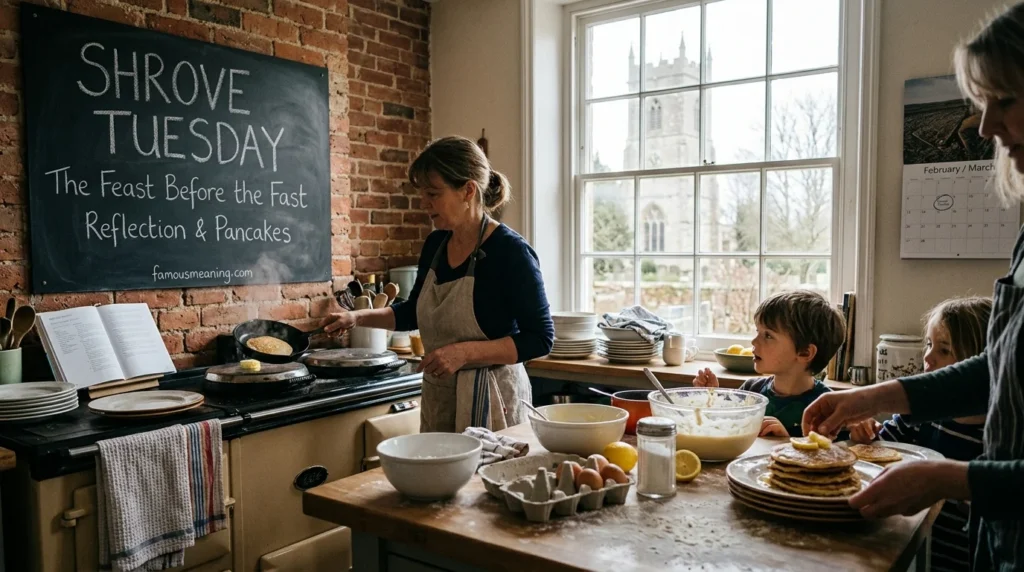
Rather than allowing these ingredients to spoil, families combined them into pancakes on the day before Lent began.
Over time, this practical tradition evolved into one of the most recognizable customs associated with Shrove Tuesday.
Today, pancake breakfasts, charity events, school celebrations, and family meals are common in countries such as:
- England
- Ireland
- Scotland
- Wales
- Canada
- Australia
- New Zealand
Many churches also organize community pancake suppers on the evening before Ash Wednesday.
Why Is It Also Known as Fat Tuesday or Mardi Gras?
Although they share the same date, the names used for the holiday vary across cultures.
| Name | Common Region | Meaning |
|---|---|---|
| Shrove Tuesday | United Kingdom | Focus on confession before Lent |
| Pancake Day | UK, Ireland | Traditional pancake meal |
| Fat Tuesday | United States | Final feast before fasting |
| Mardi Gras | France, Louisiana | French for “Fat Tuesday” |
| Carnival Tuesday | Europe, Latin America | Celebration before Lent |
The underlying purpose remains similar: it is the final day before the Lenten season begins.
The History and Origins of Shrove Tuesday
The history of Shrove Tuesday stretches back well over one thousand years.
Early Christians observed Lent as a period of fasting, prayer, and repentance in preparation for Easter. Since Lent involved giving up certain foods and luxuries, believers developed customs for using these items before the fasting period began.
By the Middle Ages, churches encouraged Christians to confess their sins before Ash Wednesday. This practice became so widespread that the day itself became known as Shrove Tuesday.
Historical records from England show that Shrove Tuesday was already being celebrated by the 11th century. Over the following centuries, the observance spread and evolved, with different countries adding their own customs, foods, and festivities.
In France, Italy, Brazil, and parts of the United States, elaborate carnival celebrations developed. In Britain and Ireland, pancakes became the defining tradition. Elsewhere, communities held feasts, dances, parades, and church services.
Even today, many of these customs continue, blending religious significance with cultural celebration.
Why Does the Date Change Every Year?
Unlike holidays with fixed calendar dates, Shrove Tuesday falls on a different day each year.
That’s because it is linked to Easter, which is determined by the lunar calendar rather than the standard Gregorian calendar.
The sequence works like this:
- Easter Sunday is calculated first.
- Lent begins 46 days before Easter on Ash Wednesday.
- Shrove Tuesday is the day immediately before Ash Wednesday.
As a result, Shrove Tuesday usually falls sometime between early February and early March.
What Does Shrove Tuesday Mean in Christianity?
For Christians, Shrove Tuesday is much more than a day to enjoy pancakes.
It marks an important transition from celebration to spiritual preparation.
Traditionally, Christians use the day to:
- Reflect on their lives.
- Confess sins.
- Seek forgiveness.
- Prepare for Lent.
- Strengthen their relationship with God.
- Consider personal sacrifices during Lent.
Many believers also decide what they will give up during Lent, such as sweets, social media, television, or other personal habits.
For churches, the day often includes:
- Prayer services
- Confession
- Fellowship meals
- Community gatherings
- Charity events
The emphasis is on entering Lent with humility and a renewed commitment to faith.
How Is Shrove Tuesday Celebrated Around the World?
Although the meaning remains consistent, celebrations differ widely across countries.
United Kingdom
The UK is famous for Pancake Day.
Families cook pancakes at home, while schools, churches, and local communities often host pancake breakfasts and pancake-flipping races.
One of the best-known traditions is the pancake race, where participants run while flipping pancakes in frying pans.
Ireland
Irish families traditionally gather to enjoy pancakes together before Lent.
Some churches also hold evening worship services and community meals.
United States
Many Americans associate the day with Mardi Gras, especially in Louisiana.
Cities like New Orleans celebrate with colorful parades, music, costumes, beads, and festivals before the reflective season of Lent begins.
France
In France, Mardi Gras includes festive meals, masks, costumes, and public celebrations.
Children often participate in community events and school festivities.
Brazil
Brazil’s famous Carnival is linked to the same period before Lent.
The celebrations include:
- Music
- Dancing
- Parades
- Costumes
- Street festivals
Although Carnival is world-famous, it also has historical roots connected to the Christian calendar.
Australia and Canada
Churches frequently organize pancake suppers that raise money for charities while bringing local communities together.
These events combine fellowship, food, and preparation for Lent.
What Does Shrove Tuesday Mean on Different Platforms?
Although Shrove Tuesday isn’t internet slang, you’ll often see it discussed online during the weeks leading up to Lent.
Text Messages
Common messages include:
- “Happy Shrove Tuesday!”
- “Who’s making pancakes tonight?”
- “See you at the church pancake supper.”
Popular posts feature:
- Pancake recipes
- Family breakfasts
- Church events
- Food photography
- Holiday traditions
TikTok
Creators often share:
- Pancake flipping challenges
- Easy pancake recipes
- Mardi Gras celebrations
- Historical facts about the holiday
- Family traditions
Many churches and community groups post:
- Event announcements
- Worship schedules
- Charity pancake breakfasts
- Volunteer opportunities
Online discussions usually focus on:
- Christian traditions
- Holiday history
- Pancake recipes
- Carnival celebrations
- Lent preparation