
What Does Unami Mean?
“Unami” does not have one universally established meaning in standard English. Its intended meaning depends on where you encountered it.
The most likely possibilities include:
A spelling confusion: The writer may have intended umami, meaning a savory taste.
A name or proper noun: It may be used as a personal name, username, brand, or fictional term.
A context-specific term: It may have a specialized meaning within a particular language, community, or subject.
If you encountered unami while reading about cooking, restaurants, or food, the intended word is likely umami. If it appeared as a person’s name or in a particular cultural context, more information may be needed to determine its meaning accurately.
1. Is Unami the Same as Umami?
Not necessarily. The two spellings should not automatically be treated as interchangeable.
Umami is an established term in English for one of the five basic tastes, alongside sweet, sour, salty, and bitter. Unami, by contrast, is not the standard spelling of that taste.
| Word | Meaning |
|---|---|
| Umami | A savory, rich taste associated with glutamate and certain other compounds |
| Unami | A spelling that may be a typo, name, or context-specific term |
| Savory | A flavor description often used to explain umami |
For example, “This soup has a deep umami flavor” is standard English usage. If someone writes “This soup has a deep unami flavor,” they may simply have misspelled umami.
2. What Does Umami Mean?
If unami was intended to mean umami, the word describes a savory taste that can make food seem rich, full-bodied, or satisfying.
The term umami comes from Japanese and is commonly translated as “pleasant savory taste.” Japanese chemist Kikunae Ikeda helped establish the scientific understanding of umami in the early twentieth century.
Umami is associated particularly with glutamate and can also be enhanced by compounds such as inosinate and guanylate.
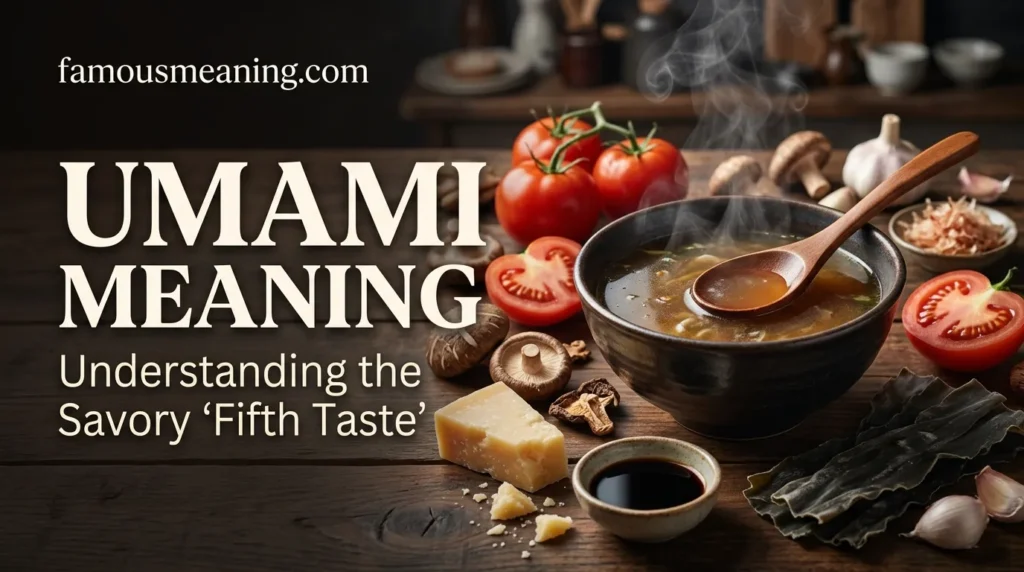
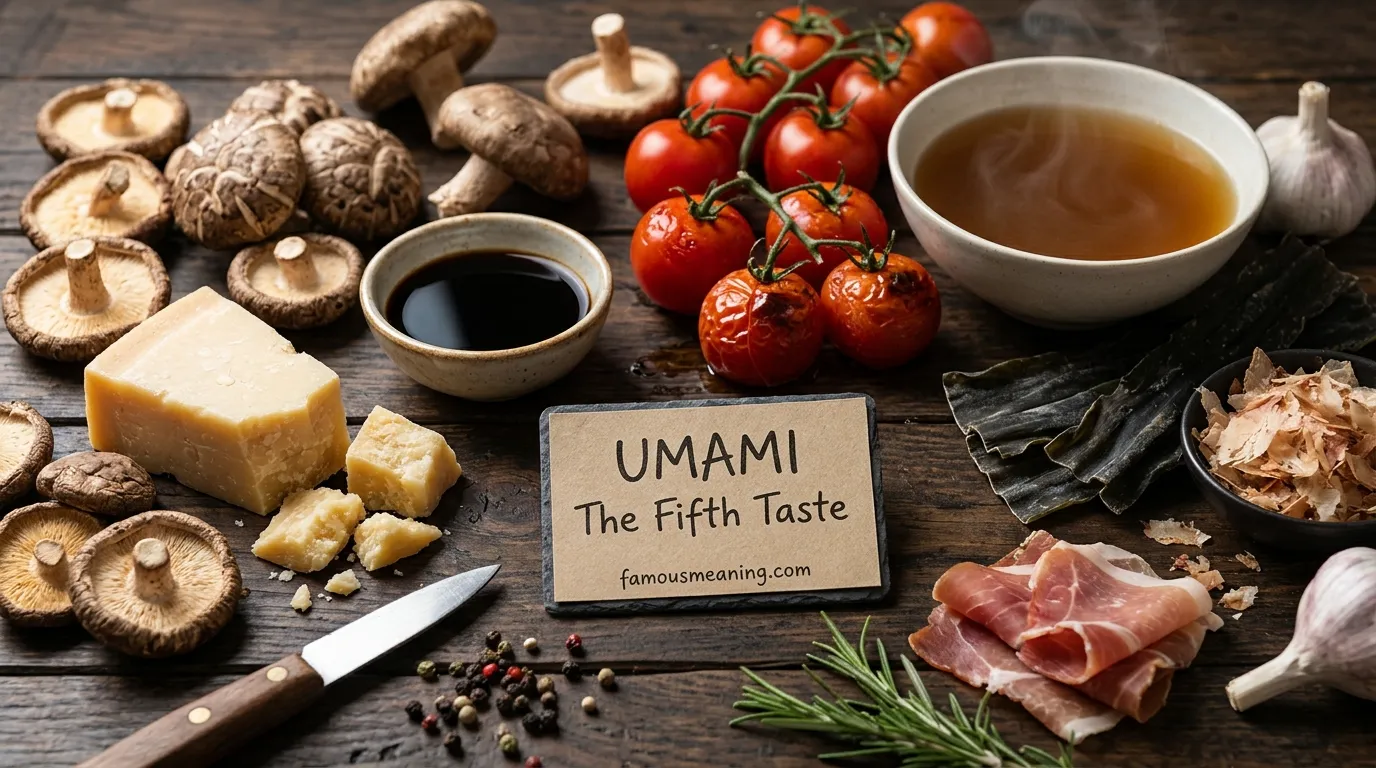
Foods often associated with umami include:
Mushrooms
Tomatoes
Parmesan cheese
Soy sauce
Miso
Seaweed
Meat and broths
These foods do not all taste identical, but they can share a savory quality that contributes to their overall flavor.
3. Why Do People Search for Unami Meaning?
People may search for unami meaning for several reasons.
They May Have Seen a Typo
A reader may encounter unami in a menu, article, recipe, or online discussion where the writer intended to use umami.
They May Be Looking for a Name Meaning
If Unami appears as a person’s name, the meaning may depend on its linguistic or cultural origin. It is best not to assign a specific meaning without reliable context.
They May Have Encountered a Specialized Term
The spelling could appear in a particular text, community, or subject area. In such cases, the surrounding sentence can help establish the intended definition.
4. How to Use Umami in a Sentence
If the intended word is umami, here are some examples of correct usage:
“The mushrooms give the sauce a rich umami flavor.”
“Soy sauce adds umami to the stir-fry.”
“The chef used Parmesan to deepen the soup’s savory taste.”
“Ripe tomatoes can contribute a noticeable umami quality.”
“Miso paste adds saltiness and umami to the broth.”
These examples show how umami is used when describing food and flavor.
5. What Is the Difference Between Umami and Savory?
The words umami and savory are closely related, but they are not exactly identical.
Umami refers specifically to one of the five basic tastes. Savory is a broader everyday term that can describe foods with rich, salty, meaty, herbal, or otherwise non-sweet flavors.
For example, a dish may be described as savory because it contains herbs and spices. It may also have a strong umami taste because of ingredients such as mushrooms, soy sauce, or aged cheese.
The terms overlap, but umami has a more specific meaning in discussions of taste.
6. Can Unami Be a Name?
It is possible to encounter Unami as a personal name, username, fictional name, or other proper noun. However, its meaning cannot be confidently established from the spelling alone.
When researching a name, consider the language in which it originated, the original spelling, and whether it has a documented cultural or historical use.
If you saw Unami in a baby-name list or a person’s profile, the source may provide useful clues. Avoid assuming that it has the same origin or meaning as the Japanese word umami simply because the spellings look similar.
7. How to Identify the Correct Meaning of Unami
The easiest way to understand unami is to examine the context in which it appears.
Food or cooking: The writer may have meant umami.
A person’s name: Look for the language, culture, and original spelling.
A social media username: It may be a chosen name without a standard dictionary definition.
A book, game, or fictional story: It may be a term specific to that fictional setting.
A technical or historical text: Check the subject and surrounding sentence before assigning a definition.
If you share the sentence where you saw the word, it may be possible to determine the intended meaning more precisely.