

🌿 What Does Urticaria Mean?
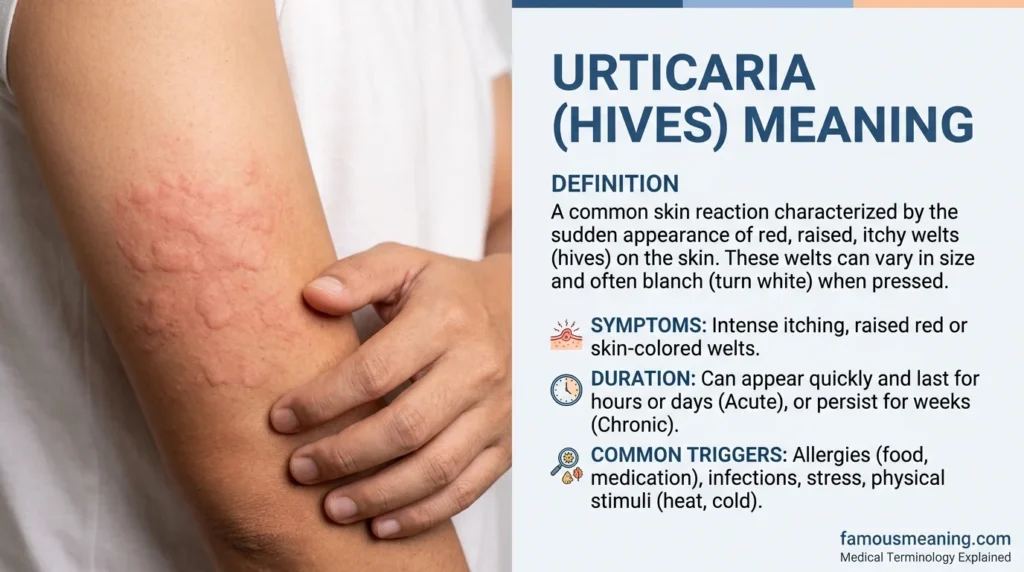
Urticaria is the medical term for hives, a skin condition characterized by raised, itchy welts that may appear anywhere on the body.
Quick Definition
Urticaria refers to a skin reaction caused by the release of histamine and other chemicals from the body’s immune system. This reaction leads to swelling, redness, and itching.
The welts may:
- Appear suddenly
- Change shape or size
- Move from one area to another
- Disappear within hours or days
What Does Urticaria Look Like?
Common signs include:
- Raised red or skin-colored welts
- Intense itching
- Swelling around the affected area
- Patches that merge together
- Welts that blanch (turn white) when pressed
The rash can appear anywhere, including:
- Face
- Arms
- Legs
- Chest
- Back
- Neck
- Hands
- Feet
What Does It Feel Like?
People with urticaria often describe it as:
- Extremely itchy
- Burning
- Tingling
- Warm to the touch
- Occasionally painful if swelling is severe
🔍 Types of Urticaria
Doctors generally classify urticaria into two main categories.
Acute Urticaria
Acute urticaria lasts less than six weeks.
Common triggers include:
- Food allergies
- Viral infections
- Certain medications
- Insect bites
- Latex
- Pollen
Most cases resolve without long-term problems.
Chronic Urticaria
Chronic urticaria lasts more than six weeks and may continue for months or even years.
In many cases, doctors cannot identify an exact cause.
Possible contributing factors include:
- Autoimmune disorders
- Chronic infections
- Thyroid disease
- Ongoing inflammation
Physical Urticaria
Some people develop hives due to physical triggers such as:
- Cold temperatures
- Heat
- Sunlight
- Pressure on the skin
- Exercise
- Sweating
- Water exposure
- Vibration
⚠️ Common Causes of Urticaria
Urticaria occurs when the immune system releases histamine, causing blood vessels in the skin to leak fluid.
Common triggers include:
Allergic Reactions
- Peanuts
- Shellfish
- Eggs
- Milk
- Tree nuts
Medications
Certain drugs may trigger hives, including:
- Antibiotics
- Aspirin
- Ibuprofen
- Blood pressure medications
Infections
Examples include:
- Common cold
- Influenza
- COVID-19
- Sinus infections
- Strep throat
Environmental Factors
- Heat
- Cold
- Sunlight
- Pollen
- Animal dander
Stress
Emotional stress may worsen existing hives or contribute to flare-ups in some individuals.
🚨 Symptoms of Urticaria
The symptoms can vary from person to person.
Common symptoms include:
- Itchy welts
- Red or skin-colored bumps
- Swelling
- Burning sensation
- Welts that change location
- Rash that comes and goes
Some people also develop angioedema, a deeper swelling beneath the skin that commonly affects:
- Lips
- Eyelids
- Tongue
- Hands
- Feet
🩺 How Is Urticaria Diagnosed?
Doctors usually diagnose urticaria through:
- A physical examination
- Reviewing your medical history
- Asking about recent foods, medications, illnesses, or environmental exposures
If symptoms persist, additional tests may include:
- Blood tests
- Allergy testing
- Skin tests
- Thyroid function tests
💊 Treatment Options
Treatment depends on the cause and severity.
Antihistamines
These are the most common treatment and help reduce itching and swelling.
Examples include:
- Cetirizine
- Loratadine
- Fexofenadine
Corticosteroids
Short courses of corticosteroids may be prescribed for severe flare-ups.
Biologic Therapy
People with chronic urticaria that doesn’t respond to antihistamines may benefit from biologic medications prescribed by a specialist.
Avoiding Triggers
If a trigger is identified, avoiding it is one of the most effective ways to prevent future episodes.
🏡 Home Remedies
While home remedies won’t cure urticaria, they may help relieve discomfort.
Helpful tips include:
- Apply cool compresses.
- Wear loose-fitting clothing.
- Avoid scratching.
- Take lukewarm showers.
- Use fragrance-free skin products.
- Keep your skin moisturized.
- Stay hydrated.
- Manage stress through relaxation techniques.
🚑 When Should You See a Doctor?
Seek medical attention if:
- Hives last longer than six weeks.
- They keep returning.
- Symptoms become severe.
- Over-the-counter treatments don’t help.
Seek emergency care immediately if you experience:
- Difficulty breathing
- Swelling of the throat
- Swollen tongue
- Trouble swallowing
- Fainting or dizziness
These symptoms may indicate a severe allergic reaction requiring urgent treatment.
❌ Common Misunderstandings
Many people mistakenly believe:
- Urticaria is contagious.
- Every case is caused by a food allergy.
- Hives always require antibiotics.
- Chronic urticaria is always allergy-related.
In reality, many cases are not caused by allergies, and the exact trigger may never be identified.
📊 Urticaria vs. Other Skin Conditions
| Condition | Main Symptoms | Difference |
|---|---|---|
| Urticaria | Raised itchy welts | Usually temporary and migratory |
| Eczema | Dry, itchy patches | Long-lasting inflammation |
| Contact Dermatitis | Rash after skin contact | Triggered by direct exposure |
| Psoriasis | Thick, scaly plaques | Autoimmune condition |
| Heat Rash | Small red bumps | Caused by blocked sweat glands |
| Insect Bites | Localized swelling | Usually limited to bite area |
😊 Can Urticaria Be Prevented?
Although not every case can be prevented, you can lower your risk by:
- Identifying personal triggers
- Avoiding known allergens
- Taking medications as directed
- Managing stress
- Protecting your skin from extreme temperatures
- Keeping a symptom diary